

 Facebook
 X
X
 Pinterest
 Copy Link
Fourplexes are Here: What Kitchener’s 1-Year Update Means for Your Property Value

![[HERO] Fourplexes are Here: What Kitchener’s 1-Year Update Means for Your Property Value](https://cdn.marblism.com/3MqBbJjsspr.webp)
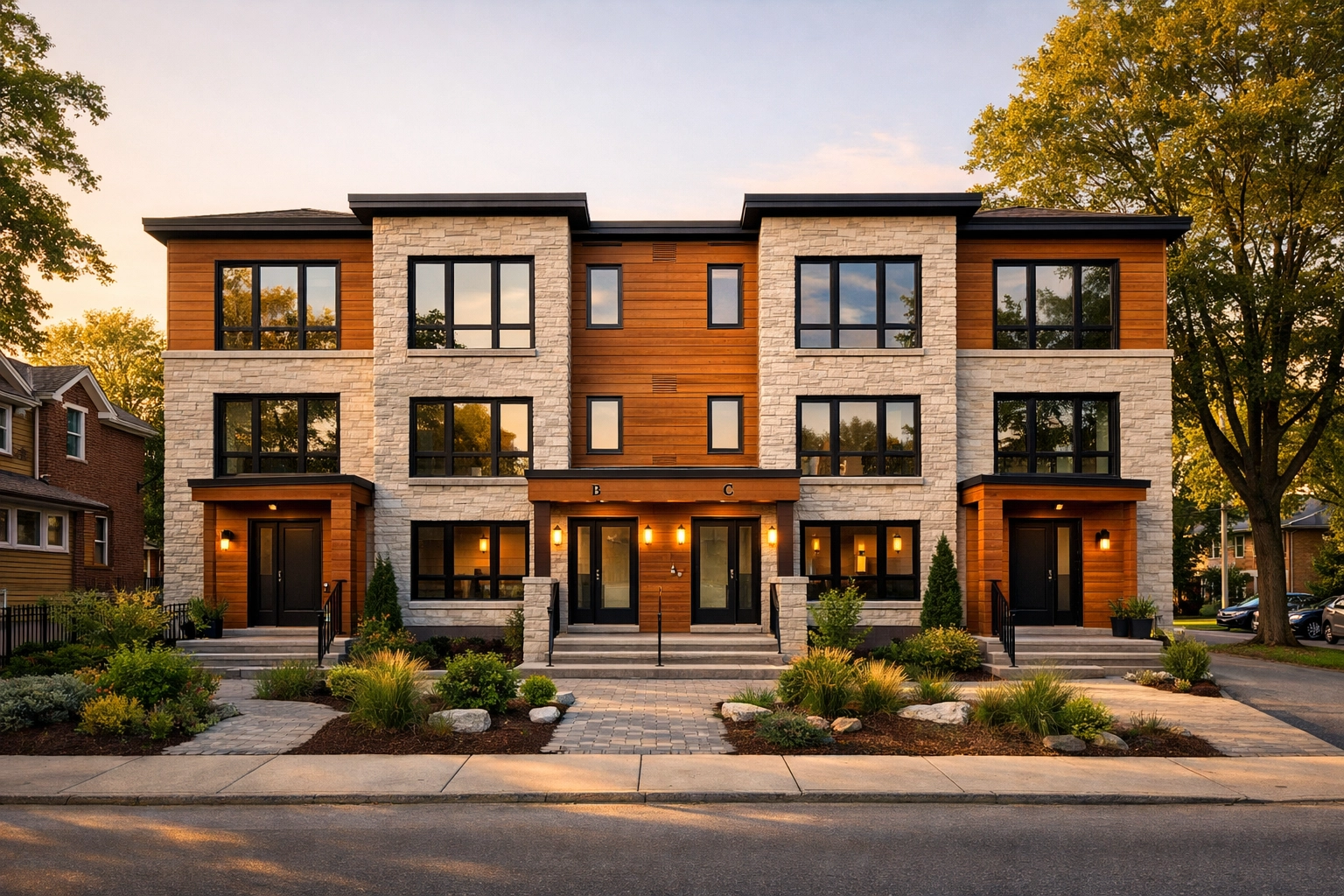
It has been exactly one year since the City of Kitchener made a bold move that changed the residential landscape of our community forever. On March 25, 2024, City Council officially greenlit the development of fourplexes on residential lots previously reserved for single-detached, semi-detached, or street townhomes.
As I look back on the last 365 days, it is clear that the “missing middle” is no longer just a buzzword in urban planning, it is a tangible reality in our neighbourhoods. For homeowners and investors in the Waterloo Region, this shift represents one of the most significant opportunities for property value growth and wealth generation we have seen in decades.
The Numbers: A 400% Surge in Activity
When the policy was first introduced, there was plenty of speculation. Would homeowners actually take the leap? Would the “Not In My Backyard” (NIMBY) sentiment stifle growth? The data from this past year tells a very different story.
According to city records, Kitchener issued 22 fourplex building permits within the first year of this program. To put that into perspective, in the five years leading up to the 2024 decision, the city issued only five such permits in total. That is a staggering 400% increase in development activity for this specific housing type.
This surge is not a coincidence. It is the result of a deliberate effort to address the housing crisis by making approximately 45 per cent of all homes in Kitchener eligible for fourplex conversion. If you own a detached home in a traditional residential pocket, there is a very high probability that your land is now worth more than it was 14 months ago, simply because of its potential for higher-density use.
Why the “Missing Middle” Matters to You
For too long, our housing market was polarized. On one end, we had high-rise condominiums like the ones you see in Modern Uptown Waterloo, and on the other, sprawling single-family estates. The “missing middle”, townhomes, triplexes, and fourplexes, was largely ignored.
By allowing fourplexes, Kitchener is creating a more diverse housing stock. This diversity is essential for several reasons:
- Multi-Generational Wealth: I am seeing more families looking to build fourplexes so they can house aging parents or adult children while maintaining separate living spaces. It is a way to keep the family together while building equity.
- Increased Rental Supply: With the student housing reversal and the general demand for units, fourplexes provide a mid-point between a basement apartment and a large apartment building.
- Property Appreciation: When you increase the “highest and best use” of a piece of land, the value typically follows. Even if you never intend to build a fourplex yourself, the fact that a future buyer could do so adds a premium to your property value.
Addressing the Elephant in the Room: Parking and Density
I wouldn’t be doing my job if I didn’t address the concerns I hear from neighbours during my open houses and consultations. The most common complaints involve parking and the “character” of the neighbourhood.
Under the new regulations, parking requirements have been significantly reduced, often from as many as nine spaces for a multi-unit dwelling down to just two. This is a dramatic shift designed to encourage transit use and maximize the building footprint.
While some residents worry about street congestion, the City of Kitchener has maintained that this is a necessary trade-off to meet provincial housing targets. As your real estate resource, I believe it is important to look at the long-term trend. As we see more development near the new transit hub, the reliance on multiple cars per household is expected to decrease.
If you are concerned about how a neighbouring fourplex might impact your specific property, I am always available to provide a professional assessment. Understanding the local zoning and the “Missing Middle and Affordable Housing Community Improvement Plan” is key to protecting your interests.
Is This the Right Time to Invest?
The market signals in the Waterloo Region are currently very interesting. According to recent data from the Cornerstone Association of Realtors, we saw a significant 26% jump in February sales, suggesting that buyers who were sitting on the sidelines are finally coming back into the fold.
For those considering a fourplex project, the financial incentives have never been better. The City of Kitchener’s grant programs can often cover development charges for additional dwelling units. This significantly lowers the barrier to entry for “mom and pop” investors who want to convert their existing detached home into a multi-unit income generator.
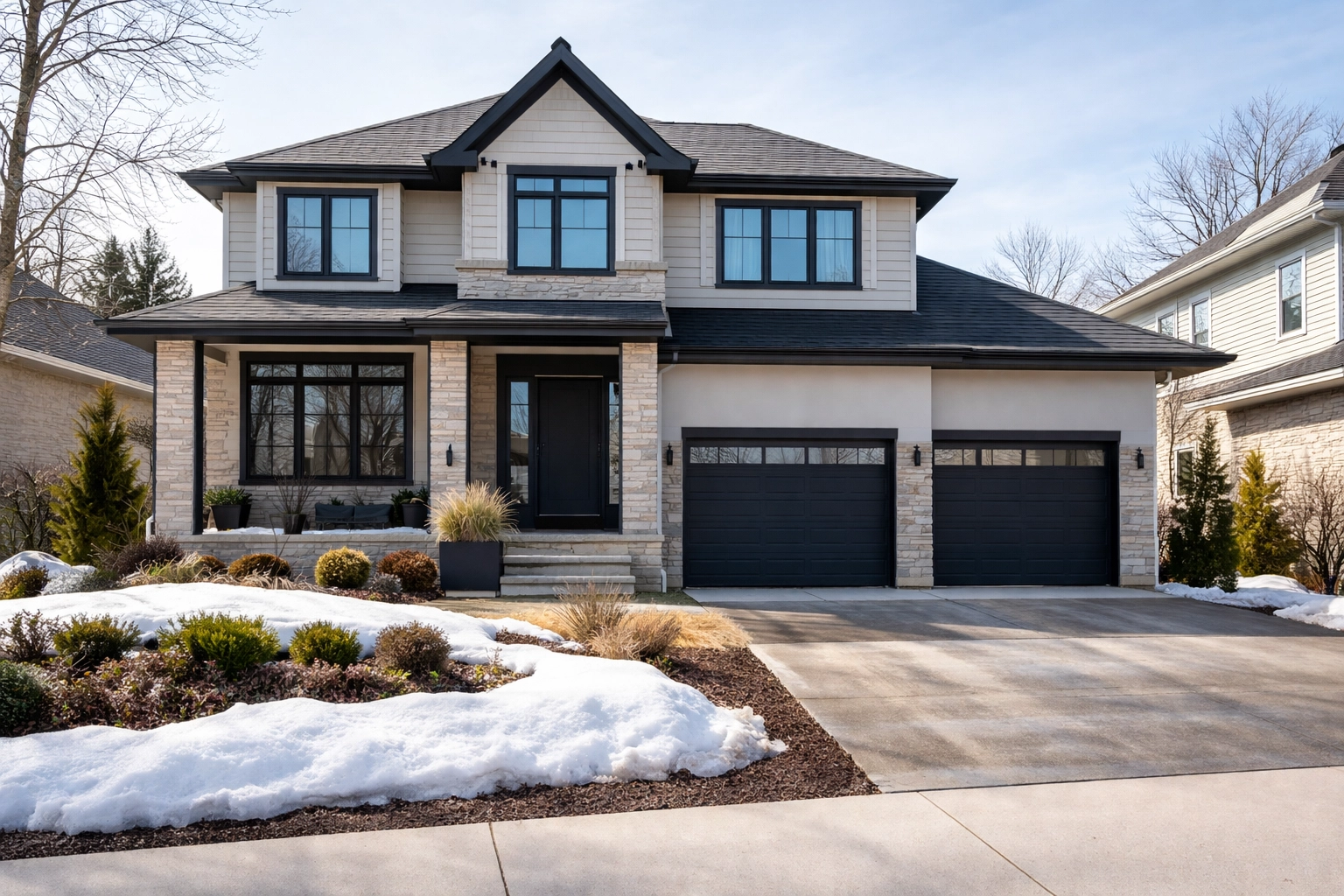
Whether you are a first-time buyer looking for a property with “mortgage helper” potential or a seller wanting to highlight the development potential of your lot, the fourplex policy is your friend.
What to Look For in a Potential Fourplex Site
If you are browsing my active listings with an eye toward a fourplex conversion, here are three things to keep in mind:
- Lot Width and Depth: While the zoning allows for fourplexes, the physical constraints of the lot must still accommodate building code requirements for fire safety and egress.
- Infrastructure: Consider the proximity to services. The city is constantly updating infrastructure to support this growth, including wastewater treatment facilities that ensure our residential subdivisions can handle increased density.
- Transit Proximity: Properties within walking distance of the ION light rail or major bus corridors will always command higher rents and see more stable appreciation in a high-density scenario.
Final Thoughts on the 1-Year Update
The first year of Kitchener’s fourplex revolution has proven that there is a massive appetite for creative housing solutions. We are moving away from the rigid “single-family only” mindset and toward a more flexible, sustainable urban model.
As your Real Estate Broker and Consultant, I make it my mission to stay ahead of these legislative changes. Whether it’s the Wilmot industrial land gamble or the intricacies of title insurance, I am here to ensure you have the facts.
If you have questions about how these new zoning rules affect the value of your specific home, or if you want to explore the feasibility of a conversion project, please reach out. I can help you run the numbers, understand the permits, and navigate the process from start to finish.

Kim Louie, Real Estate Broker partnered with Coldwell Banker Peter Benninger Realty | Your Waterloo Region Real Estate Resource
📲 519.573.0837
📧 realtorkimlouie@kimlouie.net
💻 www.kimlouie.net
*** Not intended to solicit clients under contract. Content is for informational purposes and not guaranteed nor warrantied ***
#KitchenerRealEstate #WaterlooRegion #Fourplex #MissingMiddle #PropertyValues #RealEstateInvesting #KimLouie #HousingDensity #OntarioRealEstate #HomeSellers #HomeBuyers
Kitchener’s New ‘Renoviction’ Bylaw: What Landlords and Tenants Need to Know
![[HERO] Kitchener’s New 'Renoviction' Bylaw: What Landlords and Tenants Need to Know](https://cdn.marblism.com/ElSk-wU-md9.webp)
If you have been following the news around Kitchener City Hall lately, you know that the “R-word”: renoviction: is at the top of the agenda. As we sit here in late March 2026, the landscape for rental housing in the Waterloo Region is shifting again. Kitchener Council has officially moved forward with a new “Renoviction” Bylaw, and if you are a landlord or a tenant in the city, you need to pay attention.
The goal? To stop bad-faith evictions where tenants are forced out under the guise of “major renovations” only for the unit to be re-listed at a much higher price shortly after. The reality? A new layer of bureaucracy, higher costs for property owners, and a target start date of January 2027.
As your Waterloo Region Real Estate Resource, I want to break down what this actually means for your wallet and your property rights, without all the confusing legalese.
The $650 Ticket to Renovate: Breaking Down the Costs
The headline news is the new $650-per-unit licensing fee. If you are a landlord planning a renovation that requires the tenant to vacate (specifically those tied to an N13 notice), you won’t just be filing paperwork with the Landlord and Tenant Board (LTB) anymore. You will also be applying for a municipal licence from the City of Kitchener.
For a landlord with a small triplex, a full building upgrade just became $1,950 more expensive before a single hammer is swung. But the $650 fee is just the tip of the iceberg. The bylaw introduces “red tape” designed to ensure that the renovation truly requires the unit to be empty.
What is an N13?
In Ontario, an N13 notice is used when a landlord intends to demolish the rental unit, repair it, or convert it to another use. Under the Residential Tenancies Act, if a tenant is evicted for repairs, they have the “right of first refusal”: meaning they can move back into the unit at the same rent once the work is done. However, in practice, many tenants find themselves permanently displaced. Kitchener’s new bylaw is designed to close the gap between provincial law and municipal enforcement.

Translating the Legalese: What Landlords Must Do
If you’re a landlord, you’re likely used to dealing with the LTB, which can already be a slow and frustrating process. Under the new Kitchener bylaw, expected to be fully operational by January 2027, you will have several new hurdles to clear. Here is the plain-English version of the requirements:
- Professional Assessments are Mandatory: You can no longer just say the unit needs to be empty. You will likely need a report from a qualified professional (like an architect or a structural engineer) confirming that the renovations are so extensive that the tenant cannot remain in the unit safely.
- Building Permits First: You cannot apply for the $650 renovation licence until you have already secured your building permits from the City. This means your project must be fully vetted and approved by the building department before you can even begin the eviction process.
- Clear Communication and Timelines: Landlords will be required to provide tenants with a clear information package that outlines their rights, including the right of first refusal.
- The “Comparable Housing” Factor: While the bylaw is still being refined, there is a strong push to ensure landlords help tenants find “comparable” temporary housing or provide additional compensation if the tenant chooses not to return.
The Intent vs. The Reality for Owners
The intent behind this bylaw is noble: protecting vulnerable tenants from being displaced in a tight housing market. According to recent data from the Cornerstone Association of Realtors, the Waterloo Region continues to see steady demand and limited inventory, which has kept rental prices high. The City wants to ensure that “naturally occurring affordable housing” isn’t lost to predatory investment strategies.
However, for the “mom-and-pop” landlord who has saved up to modernize a dated unit, this bylaw adds significant friction.
- Budgeting for the Extra Costs: Beyond the $650 fee, you need to budget for the professional reports. A structural engineer’s assessment can easily cost between $1,500 and $3,000 depending on the scope.
- Holding Costs: The time it takes to get a building permit, then apply for the renovation licence, then wait for the N13 notice period to expire could add months to your project timeline. During this time, your carrying costs (mortgage, taxes, insurance) don’t stop.

What Tenants Need to Know
If you are a tenant in Kitchener, this bylaw is a massive win for your housing security. It creates a paper trail that the City can track.
If your landlord serves you an N13 notice after January 2027, you should immediately ask if they have obtained their City of Kitchener Renovation Licence. If they haven’t, they may be in violation of municipal code, regardless of what the LTB says.
You still have the right to move back in at your original rent. This bylaw makes it much harder for a landlord to “flip” your unit to a new tenant at double the price while you are away. The City will now have a record of your displacement and the expected completion date of the work.
Navigating the Shift in Kitchener Real Estate
We are seeing a trend across Ontario: Hamilton was one of the first to implement a similar bylaw, and Kitchener is following suit. This indicates a shift toward more local municipal oversight of the rental market.
For investors looking at property in Kitchener, whether it’s a bungalow near the ION light rail or a mid-rise condo in the downtown core, your “pro forma” calculations need to change. You can no longer assume a quick “value-add” renovation will be seamless.
I always tell my clients: “Know your numbers, but know the rules better.” The rules in Kitchener just got a lot more complex.
If you are planning to sell a tenanted property or looking to buy an investment property in the Waterloo Region, you need a strategy that accounts for these new timelines and fees. Selling a home with a tenant requires a delicate touch, especially now that the “renovation” path is being more strictly regulated. You can read more about my thoughts on the selling process in my guide for home sellers in Ontario.

Why Jan 2027?
You might wonder why the City is waiting until January 2027 to start. It’s because they need to hire staff. This bylaw requires a new team of inspectors and administrators to manage the licensing process. This means the City is serious about enforcement. This isn’t just a “paper” bylaw; it’s an operational shift.
Final Thoughts for Landlords
Don’t let the new red tape discourage you from maintaining your properties. Well-maintained housing is essential for the health of our community. However, you must be more diligent than ever with your documentation.
- Keep Meticulous Records: Every conversation with your tenant and every quote from a contractor should be filed away.
- Consult Professionals Early: Before you serve any notices, talk to a paralegal who specializes in the LTB and a real estate consultant who understands the local Kitchener market.
- Audit Your Portfolio: If you have units that need work, consider whether it makes sense to start those projects before the 2027 deadline or if you should build the new $650+ costs into your 2027/2028 projections.
The Waterloo Region remains an incredible place to own real estate. Despite the new regulations, our proximity to the tech hub, our world-class universities, and our improving transit infrastructure: like the transit hub developments I discussed here: make this a high-demand area for years to come.
If you have questions about how the ‘Renoviction’ Bylaw affects your specific property or your plans to buy or sell in Kitchener, don’t navigate this alone. The rules are changing, and having an expert in your corner can save you thousands in fines and lost time.
Feel free to reach out to me directly. I’m here to help you make sense of the market and ensure your next move is a success.
Kim Louie, Real Estate Broker partnered with Coldwell Banker Peter Benninger Realty | Your Waterloo Region Real Estate Resource
📲 519.573.0837
📧 realtorkimlouie@kimlouie.net
💻 www.kimlouie.net
*** Not intended to solicit clients under contract. Content is for informational purposes and not guaranteed nor warrantied ***
#KitchenerRealEstate #WaterlooRegion #LandlordTenant #RenovictionBylaw #KitchenerHousing #RealEstateInvesting #OntarioRealEstate #KimLouie #ColdwellBanker #HousingMarket2026
Is the LRT Actually Coming to Cambridge? The $4.5 Billion Question
![[HERO] Is the LRT Actually Coming to Cambridge? The $4.5 Billion Question](https://cdn.marblism.com/KAkR_YmtaIB.webp)
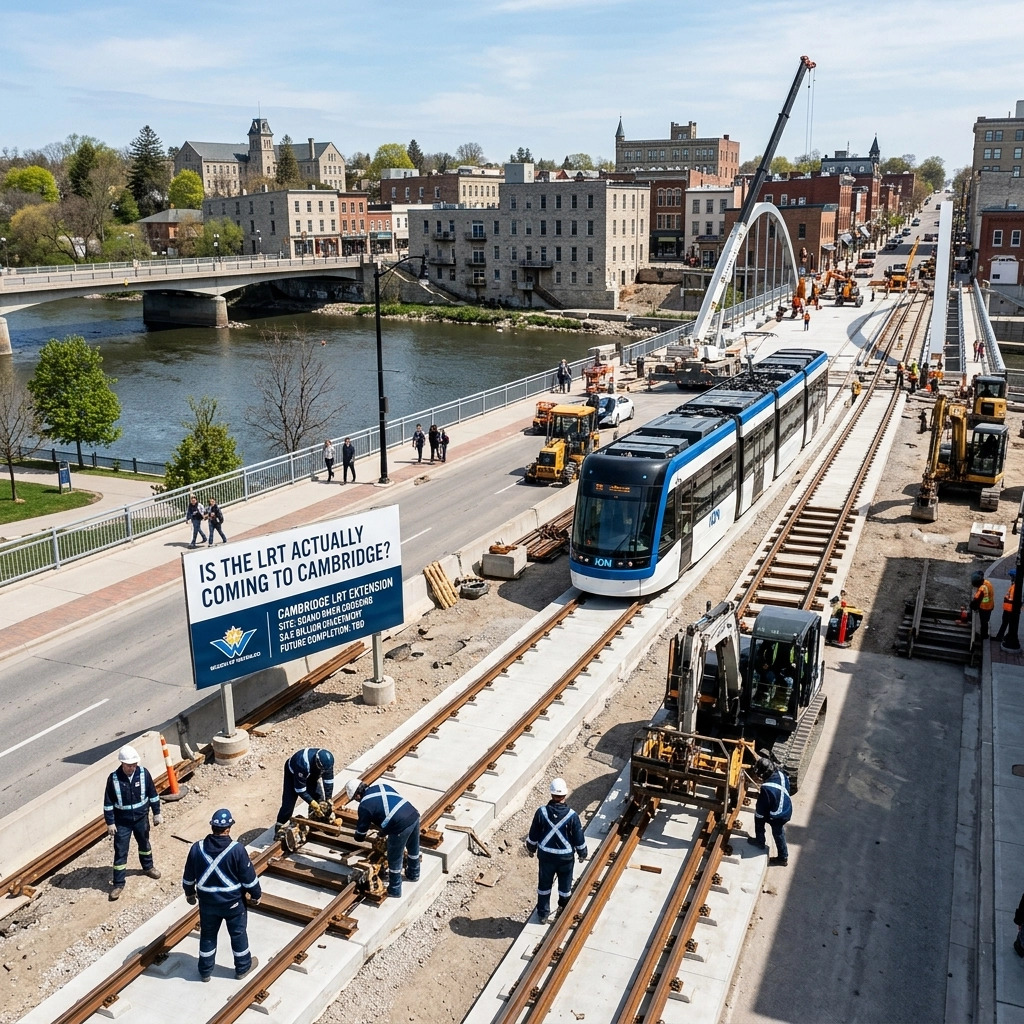
If you’ve lived in Cambridge for more than five minutes, you know that the “LRT debate” is basically our unofficial municipal sport. For years, we’ve watched those sleek blue-and-white ION trains glide through Kitchener and Waterloo, while we’ve been left wondering when, or if, they would ever make their way down the Shantz Hill stretch into our neck of the woods.
Well, this month, March 2026, we just took a massive leap forward. But as with everything in municipal politics, it’s not without a few speed bumps. The Region of Waterloo officially endorsed the $4.5 billion Phase 2 business case, moving us closer to reality than we’ve ever been. At the same time, Cambridge Council recently split 5-4 on a motion asking for a $60 million ION reimbursement.
So, the $4.5 billion question remains: Is this actually happening? And more importantly for you, what does it mean for your property value in the south end today, years before the first track is even laid?
The Political Tug-of-War: The 5-4 Split
Earlier this month, the local conversation got heated. Cambridge Council was divided, voting 5-4 to seek a $60 million reimbursement from the Region of Waterloo. This request stems from the costs Cambridge has already incurred or will incur related to the transit expansion.
This narrow split highlights the tension many of us feel. On one hand, we want the modern connectivity and the “big city” amenities that come with light rail. On the other hand, there’s a real concern about the financial burden on local taxpayers. When you see a price tag jump to $4.5 billion: up from earlier estimates of $3.1 billion: it’s natural to take a beat and ask if the ROI (Return on Investment) is really there.
However, the Regional Council’s endorsement of the business case this March is the signal that the “big machine” is moving. The plan is set: 17 kilometres of track, connecting Fairway Station to downtown Galt, with 14 new stations along the way.
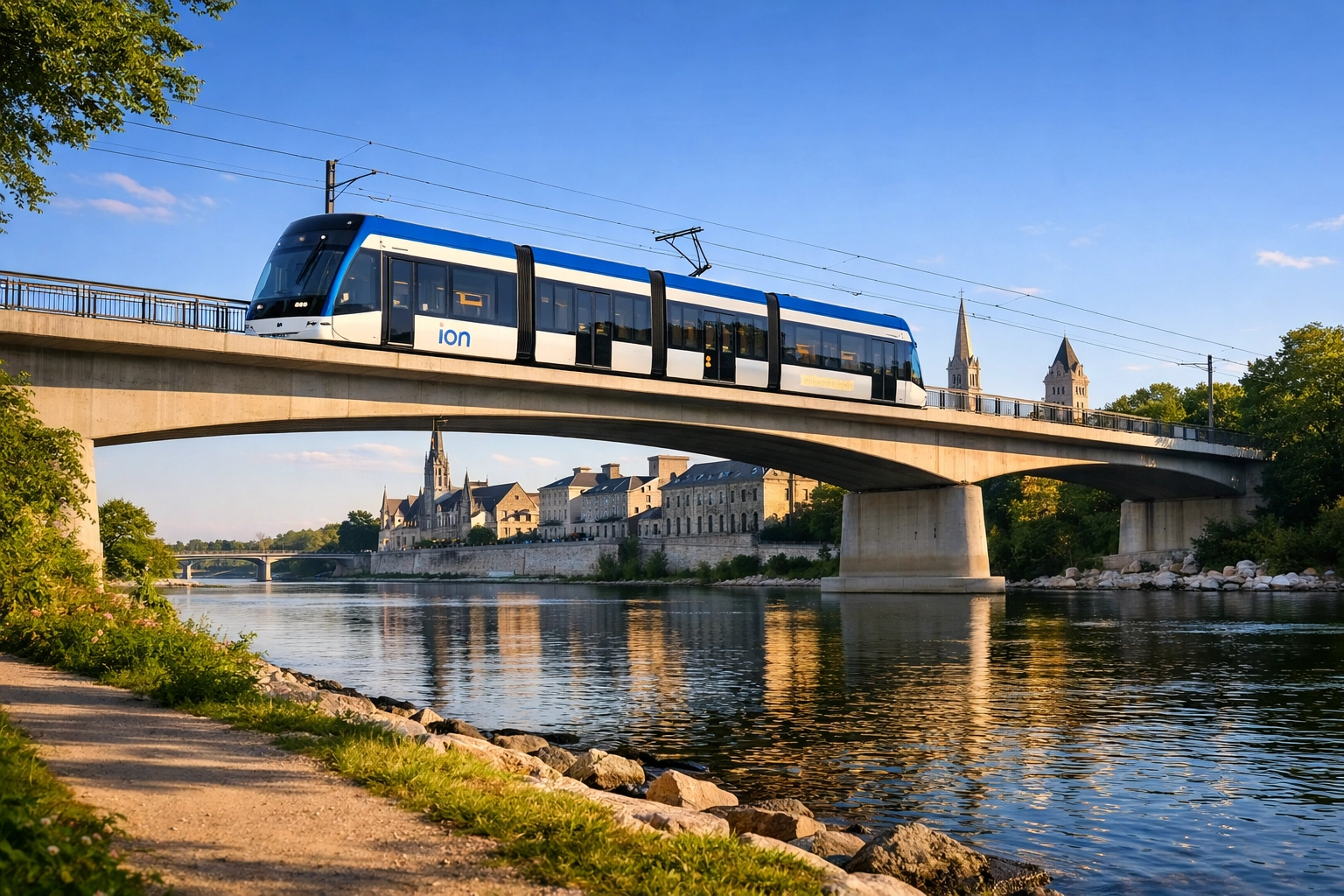
(Alt-text: A modern ION light rail vehicle moving through a busy urban centre, representing the future of Cambridge transit connectivity.)
Understanding the “Transit Premium”
In real estate, we talk a lot about location, location, location. But specifically, we talk about “The Transit Premium.” This is the quantifiable increase in property value that occurs when a home is located near a high-order transit station (like the LRT).
Historically, in cities across North America, properties within 500 to 800 metres of a rapid transit station command a higher price than similar homes further away. In the Waterloo Region, we saw this happen in real-time during Phase 1. According to Regional data, Phase 1 catalyzed over $5.25 billion in development along the Central Transit Corridor.
The interesting part? You don’t have to wait for the train to arrive to see the value go up.
The “Anticipatory Lift”
Real estate markets are forward-looking. Investors and savvy homebuyers don’t buy for what a neighbourhood is today; they buy for what it will be in five or ten years. This is called “anticipatory lift.”
Even though the Phase 2 tracks might not see a train until the early 2030s, the mere endorsement of the $4.5 billion business case this month acts as a “de-risking” event for developers. It tells the market: This is happening.
If you own a home in the Hespeler Road corridor or near the proposed stations in Preston or Galt, your “transit premium” is likely already baking into your home’s equity. People are willing to pay a bit more now to secure a spot in a neighbourhood that will eventually have a 29-minute car-free commute to Kitchener.
Why the South End is the Spot to Watch
While the entire 17-kilometre route is significant, the south end of Cambridge is particularly interesting. Areas that were once seen as purely suburban or “car-dependent” are being reimagined.
We are seeing a shift from traditional single-family detached homes toward mid-rise developments and mixed-use spaces. If you take a drive down Hespeler Road, you can already see the seeds of this change.
For homeowners in the south end, this means a few things:
- Increased Demand: As the project moves through the detailed design phase, more buyers will specifically search for homes near the future ION stops. You can check out my guide on 5 things you should know when looking for a home near a transit hub for a deeper dive into this.
- Zoning Changes: With the LRT comes “Major Transit Station Areas” (MTSAs). The provincial government and the Region often up-zone these areas to allow for higher density. If you own a larger lot near a proposed station, your land value might have just skyrocketed because of its redevelopment potential.
- Commercial Growth: It’s not just houses. The $4.5 billion investment includes six new major bridges and significant utility upgrades. This infrastructure attracts retail and professional services, making your neighbourhood more walkable and desirable.
Is It a Gamble?
I’ll be honest with you: $4.5 billion is a lot of money, and securing the full funding from provincial and federal partners is still the final hurdle. The recent 5-4 council vote shows that local support has its conditions.
However, looking at the success of Phase 1 in Kitchener and Waterloo, the precedent is strong. The ION has fundamentally changed how those cities function and how their real estate is valued. Cambridge is the final piece of that puzzle.
For those worried about the “construction years,” I hear you. It won’t be easy. But for the long-term homeowner, the temporary inconvenience of orange pylons is usually rewarded with a permanent lift in property value. If you’re wondering how this affects your specific street, you might want to look at navigating your next chapter as a seller.
The Road Ahead
The project has now entered the detailed design phase. Regional staff are currently assessing heritage elements, utility relocations, and the exact footprints of the 14 stations. Public support remains high, with 78 percent of surveyed residents supporting the full connection to Downtown Cambridge.
The “Transit Premium” isn’t a myth; it’s a proven economic driver. Whether you are a first-time buyer trying to get into the market or a long-time resident of Galt or Preston thinking about your retirement nest egg, the LRT is the most significant factor in Cambridge real estate for the next decade.
If you’re curious about how much “anticipatory lift” your home has already gained, or if you’re looking to invest in the corridor before the tracks are laid, let’s chat. I spend my time digging into council minutes and regional reports so that I can give you the most accurate, boots-on-the-ground advice.
Whether you’re buying, selling, or just trying to make sense of the latest council vote, I’m here to help you navigate the Cambridge market with confidence.
Ready to see how the LRT impacts your property value?
Whether you’re looking for a mortgage pre-approval to start your search or just want to use a mortgage calculator to see what’s possible, I’m your resource.
Kim Louie, Real Estate Broker partnered with Coldwell Banker Peter Benninger Realty | Your Waterloo Region Real Estate Resource
📲 519.573.0837
📧 realtorkimlouie@kimlouie.net
💻 www.kimlouie.net
*** Not intended to solicit clients under contract. Content is for informational purposes and not guaranteed nor warrantied ***
#CambridgeRealEstate #IONPhase2 #WaterlooRegion #LRT #CambridgeOntario #RealEstateTrends #TransitPremium #KimLouieRealEstate #OntarioHousing #Galt #Preston #Hespeler
South Kitchener Development: Why 67 New Townhomes Just Beat the ‘Water Freeze’
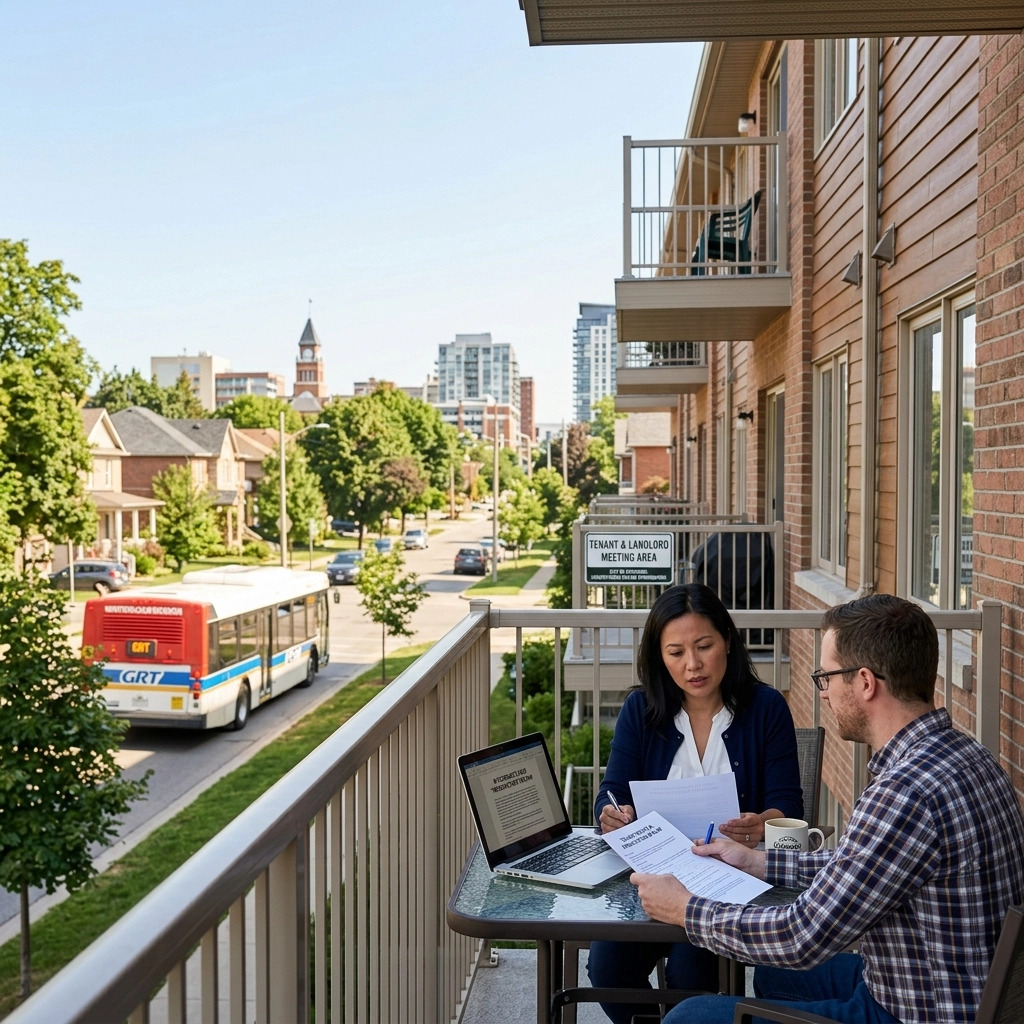
![[HERO] South Kitchener Development: Why 67 New Townhomes Just Beat the 'Water Freeze'](https://cdn.marblism.com/hL593wg84P4.webp)
If you’ve been keeping an eye on the real estate market in South Kitchener, specifically the Doon South area, you’ve likely heard some rumblings about a “freeze.” It’s not about the weather, though we certainly get our fair share of that in the Waterloo Region. Instead, it’s about water. For several years, a significant portion of South Kitchener has been under a development hold because the infrastructure simply couldn’t keep up with the pace of our growth.
But recently, a 67-unit townhome project in the Stauffer Woods and Harvest Park area managed to do what many thought was impossible right now: it got the green light. While other developers are sitting on their hands waiting for regional upgrades to the Mannheim Service Area, this project is moving forward.
As a Real Estate Broker and Consultant here in the region, I spend a lot of time digging through committee reports and council minutes. I want to know exactly why one project gets the “go” signal while others are stalled for years. Understanding these infrastructure hurdles is the difference between finding a home today or waiting for a “maybe” in 2028.
The Mannheim Service Area: Why the Tap Was Turned Off
To understand why this 67-unit approval is such a big deal, we have to look at the plumbing. Most of South Kitchener sits within the Mannheim Service Area. This is the network of pipes, pumps, and treatment facilities that ensures when you turn on the tap, water comes out, and when you flush the toilet, well, you know the rest.
The Region of Waterloo has been very clear: the existing capacity in this specific area is essentially “tapped out.” Until major upgrades are completed: which are massive, multi-year engineering feats: new large-scale developments are generally not allowed to hook up to the system. This has created a “water freeze” that has left many planned subdivisions in a state of limbo.

For a buyer, this means the inventory of new builds in Doon South has been artificially squeezed. It’s one of the reasons we saw such a competitive market earlier this year. If you’re curious about the broader market trends, you might want to check out my post on why a 26% jump in February sales was the signal buyers were waiting for.
The “Existing Capacity Agreement” Loophole
So, how did this 67-unit project in Stauffer Woods/Harvest Park beat the freeze? It comes down to a specific legal and engineering mechanism called an “Existing Capacity Agreement.”
Essentially, some developers were savvy enough (or lucky enough) to secure servicing agreements years ago, before the freeze was fully implemented. These agreements act like a “reservation” for water and sewer capacity. Even if the region stops handing out new reservations, they generally have to honour the ones that were already signed and paid for.
In this case, the project utilized a servicing agreement that was already in place for the broader subdivision plan. Because the infrastructure “room” was already technically allocated to this land, the city and region couldn’t legally deny the development on the grounds of water capacity. It’s a rare win for housing supply in a neighbourhood that desperately needs it.
Why Street-Facing Townhomes Are the ‘Gold Standard’ Right Now
The 67 units approved aren’t just any homes; they are street-facing townhomes. In the current Waterloo Region market, these are effectively the “gold standard” for both first-time buyers and those looking to downsize.
1. No Condo Fees
Unlike “stacked” towns or those located on private condo roads, street-facing townhomes are typically freehold. This means you own the land and the structure, and you aren’t paying $300 to $500 a month to a condo corporation. In a high-interest-rate environment, that extra cash flow makes a massive difference in your mortgage pre-approval numbers.
2. Curb Appeal and Privacy
Street-facing towns have their own driveways and front doors right on the municipal street. You get the look and feel of a detached home but at a townhome price point. You’re not walking through a shared hallway or looking into a neighbour’s balcony quite as closely as you would in a high-density condo project.
3. Ease of Resale
Because they appeal to such a wide demographic: from young professionals to retirees: these homes hold their value incredibly well. They represent the “missing middle” that urban planners are always talking about. If you are a buyer trying to navigate this, check out my roadmap for home buyers in Ontario for more context on property types.

Adding Diversity to Stauffer Woods and Harvest Park
South Kitchener has long been dominated by large, two-storey detached homes. While those are beautiful, they aren’t accessible to everyone. By adding 67 townhomes into the mix, this project adds much-needed “attainable” housing to a premium neighbourhood.
Stauffer Woods and Harvest Park are highly desirable because of their proximity to the 401, great schools, and the incredible trail systems that wind through Doon. However, if the only option in the area is a $1.2 million detached home, a huge segment of the market is shut out. These townhomes provide a bridge, allowing people to enter the neighbourhood at a lower price point without sacrificing the lifestyle benefits of South Kitchener.
Diversity in housing types also makes a neighbourhood more resilient. It ensures that as people’s life stages change, they can stay within their community. A young couple might start in one of these new townhomes, eventually move to a detached home nearby, and then downsize back into a similar townhome later in life.
Navigating the Infrastructure Hurdles
This approval is a reminder that real estate is about much more than just four walls and a roof. It’s about pipes, power grids, and transit. For example, being near the new transit hub is another major factor for Kitchener-Waterloo residents. You can read about 5 things you should know about living near the new transit hub to see how infrastructure continues to shape our local values.
The “water freeze” in Mannheim isn’t going away tomorrow. It will take years for the Region of Waterloo to complete the necessary upgrades to unlock the rest of the land in Doon South. This makes existing approvals and projects like the 67 units in Stauffer Woods even more valuable. They are essentially “skipped to the front of the line.”
What This Means for You
If you’ve been waiting for “the right time” to buy in South Kitchener, you need to be aware of these infrastructure limitations. Inventory isn’t going to suddenly explode in Doon South because the regional “tap” is still mostly closed. When a project like this gets approved, it represents a limited opportunity to buy into a high-demand area before the next long wait for infrastructure.
Whether you are looking to buy one of these new units or you are a seller in the area wondering how this new development affects your property value, you need a strategy. The market is moving fast, and understanding the “why” behind development approvals gives you a competitive edge.
If you’re planning on selling, it’s just as important to understand the competition. Take a look at my guide for home sellers in Ontario to see how we can position your home in this unique environment.
Real estate in the Waterloo Region is complex, but it doesn’t have to be overwhelming. I make it my business to stay on top of the council meetings and the engineering reports so you don’t have to. If you want to chat about what’s coming next for South Kitchener or any other part of our region, reach out.
Kim Louie, Real Estate Broker partnered with Coldwell Banker Peter Benninger Realty | Your Waterloo Region Real Estate Resource
📲 519.573.0837
📧 realtorkimlouie@kimlouie.net
💻 www.kimlouie.net
*** Not intended to solicit clients under contract. Content is for informational purposes and not guaranteed nor warrantied ***
#WaterlooRegion #KitchenerReal Estate #DoonSouth #StaufferWoods #Harvest Park #RealEstateBroker #KimLouie #UrbanDevelopment #KitchenerHousing #HomeBuyingTips #OntarioRealEstate #NewConstruction
Navigating Your Next Chapter: A Guide for Home Sellers in Ontario


Selling your home is a major milestone, and having a clear roadmap can make the process much smoother. Here are some of the most common questions I receive from clients as they prepare to transition to their next property.
Closing Day: What to Expect
On the big day, the transfer of funds typically occurs in the mid to late afternoon. Once your lawyer confirms they have received the money, they will authorize the buyer’s lawyer to release the keys. You are required to vacate the property once those funds are received and the keys are handed over.
Understanding the Offer Process
When you receive an offer, you have three primary paths to take:
-
Accept: Agree to the terms as presented.
-
Reject: Decline the offer if it doesn’t meet your needs.
-
Counteroffer: Propose new terms, which then becomes your offer to the buyer.
Most offers come with conditions, such as the buyer securing financing, completing a home inspection, or selling their current home. The contract is finalized once the buyer waives these conditions or provides a notice of fulfillment.
Preparing for the Handover
To ensure a seamless transition for the new owners, please ensure you leave the following items:
-
Manuals & Remotes: Instructions for appliances and remotes for garage doors, fireplaces, or ceiling fans.
-
Access: All keys (including spares) and any necessary access cards.
-
Mail: Information regarding the location of community mailboxes.
Budgeting Beyond Commission
While real estate commissions are a primary consideration, don’t forget to budget for:
-
Legal Fees: Generally between $1,500 and $2,000.
-
HST: This applies to both commissions and legal fees.
-
Utilities & Rentals: Account for disconnection fees and any service agreements for equipment like water heaters or softeners.
Unlocking Your Future: A Roadmap for Home Buyers in Ontario


Buying a home is an exciting journey, but the final steps can often feel like a whirlwind. To help you prepare for a successful closing, I’ve compiled the answers to the questions most buyers ask.
The Keys to Your New Home
The moment you’ve been waiting for—getting the keys—usually happens in the mid to late afternoon on closing day. You officially take possession once your lawyer confirms the funds have reached the seller’s lawyer and the keys are handed over. It is always best to stay in close contact with your legal counsel for the exact timing.
Navigating Negotiations and Conditions
When you submit a purchase offer, it often includes conditions such as financing, a home inspection, or the sale of your current property. If the seller chooses to counter your offer, you then have the option to accept their terms, reject them, or propose another counteroffer of your own.
What You’ll Find at Your New Property
On closing day, the seller is expected to leave behind essential items for your convenience:
-
Documentation: Manuals for appliances and chattels.
-
Equipment: Remotes for fireplaces, garage doors, and fans.
-
Access: All keys, spares, access cards, and mailbox location details.
Planning for Closing Costs
Beyond the purchase price, it is important to have funds set aside for additional expenses:
-
Legal Fees: Typically ranging from $1,500 to $2,000.
-
Taxes: Land transfer taxes (which vary by location) and HST on new builds or specific services.
-
Adjustments: Reimbursements to the seller for prepaid items like property taxes or utilities.
-
Inspections: Fees for professional home inspections if they haven’t been settled.
The Ins and Outs of Title Insurance in Ontario: What Every Homeowner Needs to Know


If you are currently navigating the Waterloo Region real estate market, you know that the journey from browsing listings to holding the keys in your hand is filled with paperwork, legal jargon, and plenty of “to-do” lists. One item that often pops up near the finish line is title insurance.
As a real estate broker and consultant here in the region, I often see first-time homebuyers in Ontario tilt their heads when their lawyer mentions this. Is it just another fee? Is it mandatory? Does it cover a basement flood? (Spoilers: no, that’s your other insurance).
In this deep dive, I am going to break down the “ins and outs” of title insurance so you can move forward with your purchase with total confidence.
What Exactly is Title Insurance?
In the simplest terms, title insurance is an insurance policy that protects you (and your lender) against losses related to the property’s title or ownership.
Think of “title” as your legal right to own and use your land. If someone challenges that right or if there is a hidden defect in the title that prevents you from selling or mortgaging the home later, title insurance steps in to cover the financial loss.
The most unique thing about title insurance: and something every first-time homebuyer in Ontario loves to hear: is that it is a one-time premium. Unlike your car or life insurance, you don’t pay for it annually or monthly. You pay it once during the closing process, and it protects you for as long as you (or your heirs) own the property.
Title Insurance vs. Homeowner’s Insurance: Know the Difference
It is a common mistake to think these two are the same thing, but they serve completely different purposes.
- Homeowner’s (Property) Insurance: This is what you get from your home insurance provider to cover physical damage. If a fire breaks out, a pipe bursts in your Kitchener bungalow, or a storm damages your roof, this policy handles the repairs.
- Title Insurance: This covers the legal integrity of your ownership. It doesn’t care if the roof leaks, but it cares deeply if the person who sold you the house didn’t actually have the legal right to do so.
What Does Title Insurance Cover?
When you work with a real estate agent in Waterloo Region, we want to ensure your investment is bulletproof. Title insurance covers a surprising range of “what-if” scenarios that a standard title search might not catch.
1. Real Estate Fraud and Forgery
This is the big one. Real estate fraud has unfortunately become more sophisticated in Ontario. Fraudsters can attempt to forge documents to transfer the title of your home to themselves or take out a mortgage against your property without you knowing. Title insurance is your primary line of defence against these identity-theft-style scams.
2. Liens and Unpaid Debts
Imagine buying a beautiful condo in Uptown Waterloo, only to find out months later that the previous owner hadn’t paid their property taxes or utility bills for two years. Without title insurance, those “liens” (legal claims) stay with the property: meaning they become your problem. Title insurance typically covers these unpaid debts.
3. Encroachment Issues
Let’s say you buy a home in an established neighbourhood like Westmount. After moving in, you decide to build a new deck, only to discover that your neighbour’s fence or shed is actually two feet onto your property. Or worse, your garage is encroaching on the city’s land. Title insurance can help resolve these boundary disputes, which can otherwise be incredibly expensive and legally draining.

Visualizing a boundary dispute: A professional diagram or photo showing a fence crossing a property line.
4. Municipal Work Orders and Zoning Non-Compliance
If the previous owner did a major renovation: like finishing a basement or adding an addition: without getting the proper building permits, the City of Waterloo or the City of Kitchener could issue a work order. They might even force you to tear down the unpermitted work. If your policy covers it, title insurance may pay for the cost of bringing the property up to code or rectifying the lack of permits.
Owner’s Policy vs. Lender’s Policy
When your lawyer sets up your insurance, you will likely hear about two different types of policies. It is important to understand who is being protected.
- The Lender’s Policy: Most mortgage lenders in Ontario require title insurance as a condition of the loan. This protects the bank’s interest in the property. However, the lender’s policy does not protect you, the homeowner.
- The Owner’s Policy: This is the one you buy for yourself. It protects your equity and your right to live in the home. While it is technically optional, I always recommend it for the peace of mind it provides.
In many cases, your lawyer can get both policies together at a discounted “bundle” rate during the closing process.
Why It Matters Specifically for Waterloo Region Real Estate
The Waterloo Region real estate market is fast-paced. Whether you are looking at historic homes in Galt or brand-new developments in Wilmot, the history of land ownership in Ontario is long and complex. Errors in public records happen. Human error during a survey happens.
According to the Ontario Real Estate Association (OREA), protecting consumers is a top priority, and title insurance is one of the most effective tools for that protection. In a market where home prices are significant, a one-time fee of roughly $250 to $400 (depending on the property value) to protect a million-dollar asset is a no-brainer.

What It Does NOT Cover
While title insurance is comprehensive, it isn’t a “get out of jail free” card for every house problem. Here are common exclusions:
- Known Defects: If you knew about a title issue before you bought the house and didn’t disclose it, you aren’t covered.
- Environmental Hazards: Issues like soil contamination or the presence of mould are generally not covered.
- Native Land Claims: This is a specific exclusion in many standard policies.
- Future Issues: Problems that arise after you’ve purchased the policy (like a new renovation you do without a permit) are your responsibility.
- Zoning Changes: If the city decides to change the zoning of your street three years after you move in, title insurance won’t help you fight it.
How the Process Works (The Closing “Ins and Outs”)
The good news is that you don’t have to go shopping for title insurance like you do for a car. Your real estate lawyer handles the heavy lifting.
- Preparation: As your closing date approaches, your lawyer performs title searches and due diligence.
- Application: Your lawyer contacts a title insurance company (like FCT or Stewart Title) and provides the property details.
- The Premium: The cost is added to your statement of adjustments. You pay it once on your closing day.
- Ongoing Protection: You don’t get a bill next year. You just tuck the policy away with your legal papers and sleep soundly.

A high-quality image of a real estate closing: Hands signing documents next to house keys and a calculator.
Final Thoughts from Kim
Buying a home is likely the biggest investment you will ever make. Whether you are using my mortgage calculator to crunch numbers or checking out the latest market updates, you want to know your investment is safe.
Title insurance is that extra layer of security that ensures no one can take your home away due to a clerical error from 1950 or a dishonest act from 2024. If you have more questions about how title insurance fits into your specific purchase, or if you’re ready to start your search for a home in the Region, I’m here to help.
Kim Louie, Real Estate Broker partnered with Coldwell Banker Peter Benninger Realty | Your Waterloo Region Real Estate Resource
📲 519.573.0837
📧 realtorkimlouie@kimlouie.net
💻 www.kimlouie.net
*** Not intended to solicit clients under contract. Content is for informational purposes and not guaranteed nor warrantied ***
#WaterlooRegion #RealEstate #Kitchener #Waterloo #TitleInsurance #FirstTimeHomeBuyer #OntarioRealEstate #KimLouie #HomeOwnership #PropertyLaw
Looking for a Home Near the New Transit Hub? Here Are 5 Things You Should Know


If you have spent any time in Downtown Kitchener lately, you have likely noticed the massive transformation taking place at the corner of King Street West and Victoria Street. What was once an underutilised industrial patch is rapidly evolving into the Kitchener Central Transit Hub: the future “Union Station” of the Waterloo Region.
As a Real Estate Broker and Consultant, I am constantly asked by buyers and investors: “Is it the right time to buy near the hub?” My answer is usually a resounding yes, but with a few essential caveats. Moving near a major infrastructure project isn’t just about convenience; it is about understanding the long-term shift in how our community functions.
Whether you are a young professional working in the Innovation District or an investor looking for a stable asset, here are five things you absolutely need to know about buying a home near the new transit hub.
1. Unmatched Connectivity: The “All-In-One” Advantage
The Kitchener Central Transit Hub is designed to be the ultimate multi-modal centre. For the first time in our region’s history, we are seeing the seamless integration of every major transport system in one physical location.
When completed, the hub will link:
- The ION Light Rail: Connecting you to Waterloo and South Kitchener.
- GO Transit: Providing expanded two-way, all-day rail service to Toronto.
- VIA Rail: Connecting the region to the national rail network.
- Grand River Transit (GRT): The local bus network and the new express lines.
For a homeowner, this means your “commute” becomes a flexible choice rather than a chore. Imagine living in a neighbourhood where you can walk out your front door, hop on a train to a meeting in downtown Toronto, and be back in time for dinner at a local DTK bistro: all without touching a steering wheel. This level of connectivity is a rare find in Ontario outside of the GTA, and it is a massive draw for the modern workforce.
2. The “Transit Premium”: Understanding the Data
In the real estate world, we talk a lot about the “Transit Premium.” This is the measurable increase in property value that occurs when a home is located within walking distance (typically 500 to 800 metres) of a major transit station.
According to data trends often cited by the Cornerstone Association of Realtors, properties located near high-order transit lines like the ION or GO stations tend to show higher resilience during market dips and faster appreciation during growth cycles. Buyers are willing to pay more for the saved time and reduced cost of car ownership.
In the Waterloo Region real estate market, we have already seen a surge in interest for condos and townhomes within the “inner ring” of the new hub. If you are looking to build equity, positioning yourself near this infrastructure is one of the smartest moves you can make. You can even use my mortgage calculator to see how a purchase in this area fits into your long-term financial plan.
3. Live-Work-Play: The Innovation District Synergy
Proximity to the transit hub isn’t just about leaving Kitchener; it’s about what is right at your doorstep. The hub sits directly adjacent to the Innovation District, the heart of our local tech economy.
With Google’s massive Canadian headquarters just steps away, along with the Communitech Hub and the Velocity incubator, this area is teeming with high-income talent. This creates a “Live-Work-Play” ecosystem that is highly desirable.
- Work: Walk to some of the biggest tech firms in the world.
- Live: Choose from modern mid-rise developments or historic Victorian homes in the nearby Cherry Hill or Victoria Park neighbourhoods.
- Play: Enjoy the amenities of Downtown Kitchener, from the Kitchener Market to the nightlife on King Street.
Living here means you are at the centre of the action. If you want to see what is currently available in this high-demand pocket, you can browse through my active listings or start a broader property search here.
4. What to Expect During Construction: The Reality Check
I always believe in giving my clients the full picture. While the long-term benefits of the hub are incredible, the short-term reality involves construction.
The groundbreaking for the main station building is slated for the 2025/2026 period. If you are buying a home or a condo in the immediate vicinity, here is what you should prepare for:
- Road Changes on Victoria St: Expect significant detours and lane closures. Victoria Street is a major artery, and the transition to a transit-first design will involve some growing pains for drivers.
- Noise and Dust: Large-scale excavations and structural work mean that for a year or two, the area will be a hive of activity. If you work from home and need absolute silence, you might want to look a few blocks further out.
- Long-term Payoff: Remember, the temporary inconvenience of a construction fence is exactly what creates the value. By the time the ribbons are cut, the “entry price” for the neighbourhood will likely have shifted significantly higher.

5. The Future Landscape: A Vision for a Million Residents
The Kitchener Central Transit Hub is a cornerstone of the Region of Waterloo’s official plan to accommodate a population of one million residents by 2051. This isn’t just about one building; it is about Transit-Oriented Development (TOD).
We are going to see a dramatic increase in density. Expect more mixed-use towers that combine residential units with ground-floor retail, grocery stores, and professional services. The vision is a “15-minute city” where everything you need is accessible by foot or transit.
For buyers, this means the character of the neighbourhood will continue to evolve. You aren’t just buying a house; you are buying into the future urban core of Ontario’s fastest-growing region. Understanding these zoning shifts and density targets is where my expertise as a consultant comes in. I help you see not just what the street looks like today, but what it will look like ten years from now.
Is This the Right Move for You?
Moving to the Waterloo Region is an exciting step, but choosing the right neighbourhood requires a deep dive into local infrastructure and market trends. The transit hub area offers a unique blend of urban energy and long-term investment potential that is hard to beat.
If you are curious about how these developments will impact your specific real estate goals, I would love to chat. Whether you are a first-time buyer needing a mortgage pre-approval or a seller wondering how the hub affects your property value, I am here to help.
Kim Louie, Real Estate Broker partnered with Coldwell Banker Peter Benninger Realty | Your Waterloo Region Real Estate Resource
📲 519.573.0837
📧 realtorkimlouie@kimlouie.net
💻 www.kimlouie.net
*** Not intended to solicit clients under contract. Content is for informational purposes and not guaranteed nor warrantied ***
#WaterlooRegionRealEstate #KitchenerTransitHub #MovingToWaterlooRegion #DTK #KitchenerRealEstate #TransitOrientedDevelopment #WaterlooTech #KimLouieRealEstate
The Student Housing Reversal: Navigating Waterloo’s New Rental Reality
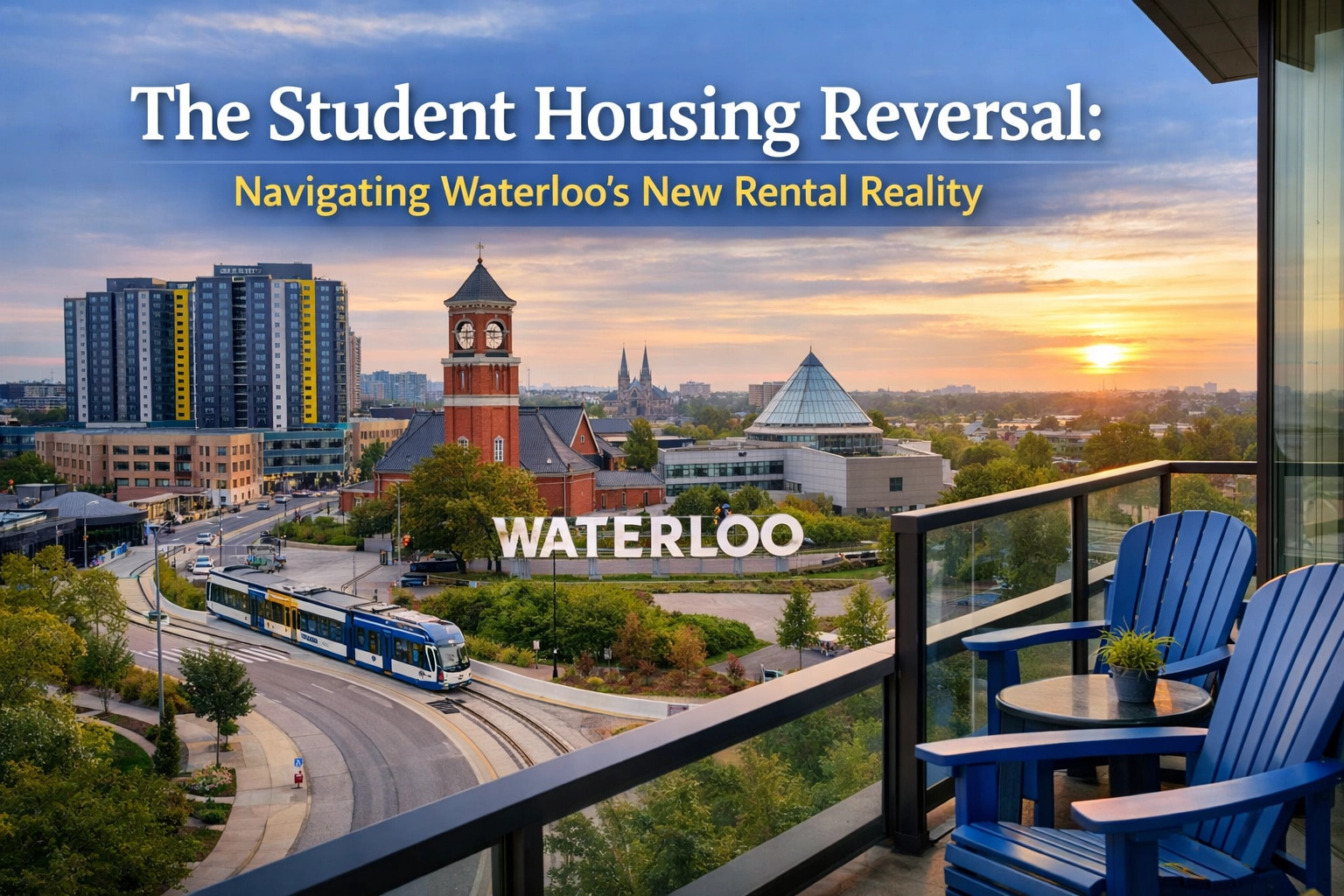
If you’ve been investing in Waterloo Region’s rental market over the past five years, particularly around the university corridor, you’ve likely noticed something unsettling: the rules of the game have fundamentally changed. The student housing gold rush that defined our market from 2018 through 2023 has hit a wall, and many landlords are now facing a reality they didn’t see coming.
I’m going to walk you through what’s actually happening beneath the surface of Waterloo’s rental market, why this shift matters more than most people realize, and what it means for your investment strategy moving forward.
The Federal Policy Earthquake
In January 2024, the federal government imposed a two-year cap on international student permits, reducing approvals by 35% nationally. For Waterloo Region: home to the University of Waterloo and Wilfrid Laurier University: this wasn’t just another policy adjustment. It was a market reset.
The University of Waterloo alone hosts over 6,500 international students, representing approximately 15% of its total enrolment. When you factor in Laurier and Conestoga College, international students have been the demographic backbone of our purpose-built student housing boom. Developers built thousands of units anticipating continued growth in this segment.
That growth has stopped.
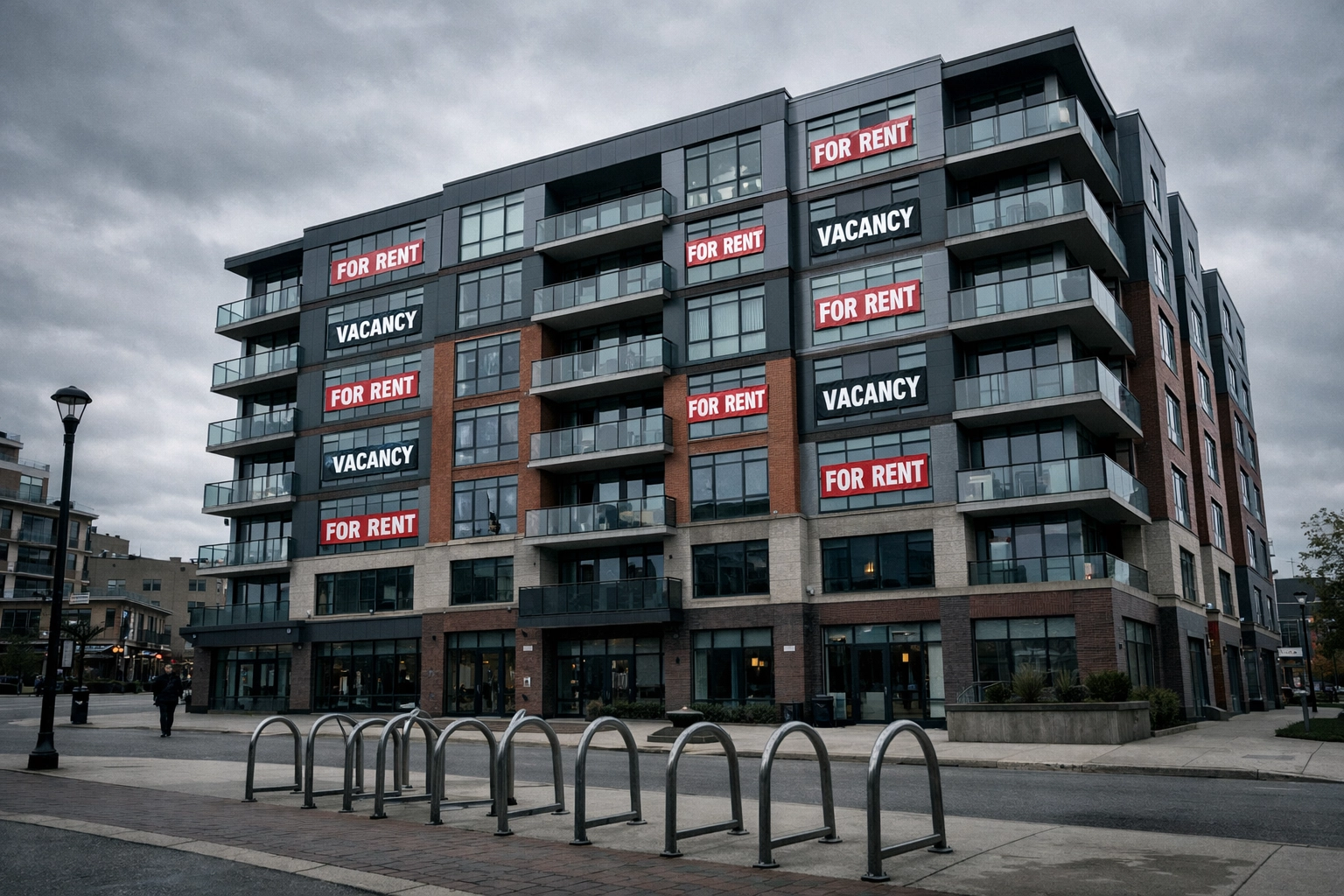
According to Statistics Canada, rental vacancy rates in Kitchener-Cambridge-Waterloo hit their highest levels since 1993 in fall 2024, climbing to 3.8% from 1.9% the previous year. That’s not a marginal shift: it’s a doubling of available units in a market that was chronically undersupplied just 18 months ago.
The Condo Investor Squeeze
Here’s where it gets uncomfortable for a lot of investors. Between 2019 and 2023, hundreds of investors purchased pre-construction condos in Uptown Waterloo, around the universities, and along the ION corridor specifically to capture student rental demand. The math made sense at the time: international students paid premium rents, were reliable tenants, and the vacancy risk was minimal.
Today, those same investors are dealing with three simultaneous pressures:
First, competition has intensified. Purpose-built student housing developments like ICON and Sage have added over 2,000 beds to the market since 2022. These buildings offer amenities, furnished units, and all-inclusive pricing that individual condo landlords can’t match without significant capital investment.
Second, rental rates have softened. Where a one-bedroom near the universities commanded $1,800-$2,000 per month in 2023, those same units are now listing at $1,600-$1,750. That’s a 10-15% compression in gross rental income.
Third, carrying costs haven’t decreased. Mortgage rates remain elevated compared to the 2020-2021 period when many of these purchases were made. Property taxes in Waterloo increased by 5.9% in 2024 and are projected to rise another 6-8% in 2026 due to the Region’s infrastructure funding shortfalls under Bill 23. Condo fees continue their annual escalation.
The result? Negative cash flow for many investors who were counting on appreciation to offset operating losses.
The Short-Term Rental Trap Door
Some landlords looked at short-term rentals as an escape hatch. If long-term student demand was softening, why not pivot to Airbnb and capture business travellers or parent weekend demand?
That door is closing.
As of July 2026, Waterloo’s short-term rental regulations will eliminate the current exemption for apartment units. Under the new framework, short-term rentals must be operated in your principal residence: meaning investment condos will no longer qualify for STR licensing.
The City estimates approximately 100 of the 500 active short-term rentals in Waterloo will be forced back into the long-term rental market. That’s additional supply hitting an already oversupplied segment.
The only regulatory grey area remaining is mid-term rentals of 30+ days, which may fall outside the new licensing requirements. But that’s a niche market, not a scalable solution.
What The Data Actually Shows
Let me be clear about what the statistics are telling us, because there’s a lot of noise out there.
The Canadian Mortgage and Housing Corporation (CMHC) reported that purpose-built rental apartment vacancy rates in Kitchener-Cambridge-Waterloo climbed from 1.9% in October 2023 to 3.8% in October 2024. That’s the highest rate since their 1993 survey data.
For context, a “balanced” rental market typically sits around 3%. Above 3%, landlords start competing for tenants rather than tenants competing for units. We’ve crossed that threshold decisively.
The University of Waterloo’s fall 2025 enrolment data (released in November 2025) showed international undergraduate enrolment declined by 12% year-over-year, with further declines projected for fall 2026 due to the ongoing federal caps.
Meanwhile, condo completions in Waterloo Region are projected to add another 1,400 units to the rental supply in 2026, according to regional development tracking data. Many of those units were pre-sold to investors during the 2021-2022 buying frenzy.

The Strategic Pivot
So what do you do if you’re holding a condo that’s no longer penciling out as a student rental?
Option One: Reposition for Young Professionals
Waterloo’s tech sector employment remains robust despite broader economic headwinds. Google, Shopify, and OpenText continue to employ thousands of workers in the 25-35 age bracket: precisely the demographic that rents condos long-term.
The challenge? These tenants expect different unit conditions than students. You’ll need to upgrade finishes, ensure in-suite laundry, and provide parking. That requires capital investment.
Option Two: Consider Owner-Occupancy
If you’re within 3-5 years of retirement or lifestyle downsizing, moving into your investment condo and converting your primary residence to a rental (or selling it) might make more financial sense than continuing to subsidize a negative cash flow property.
This also positions you to eventually use the principal residence exemption on capital gains when you sell.
Option Three: Strategic Divestment
This is the option no one wants to discuss, but it’s sometimes the correct financial decision. If your condo is in a building with rising maintenance issues, special assessments on the horizon, or structural vacancy problems, holding onto it hoping for a market recovery could cost you more than selling now and redeploying capital elsewhere.
I’ve had three investor clients in the past four months make this exact decision, selling condos near the universities at modest losses but avoiding 2-3 years of negative cash flow that would have eroded their equity position further.
What I’m Watching in 2026
The rental market dynamics I’m monitoring most closely are:
1. Spring 2026 Lease-Up Rates: May-August is when student housing traditionally signs leases for the September term. If vacancy rates remain elevated through this period, we’ll know the oversupply isn’t transitory.
2. Purpose-Built Student Housing Absorption: Several major PBSH projects deliver in summer 2026. How quickly they fill (and at what rental rates) will signal whether developers overbuilt this segment.
3. Regional Transit Expansion: If the ION LRT extension to Cambridge proceeds on schedule, rental demand dynamics along the corridor could shift significantly, creating pockets of opportunity in currently underserved areas.
4. Federal Policy Adjustments: The international student cap is currently set to expire in 2026. Whether it’s extended, modified, or eliminated will be the single biggest factor affecting Waterloo’s rental market for the next 3-5 years.
The Bottom Line
Waterloo’s student housing market has shifted from scarcity to surplus faster than most investors anticipated. The confluence of federal immigration policy, purpose-built student housing oversupply, and tightening short-term rental regulations has created a perfect storm for condo investors who were banking on continued demand growth.
This isn’t a temporary blip. The structural factors driving this shift: government policy, demographic trends, and supply pipeline momentum: have multi-year timelines.
If you’re holding rental properties in this segment, now is the time for an honest financial assessment. Calculate your true carrying costs including opportunity cost of capital. Project realistic rental income based on current market conditions, not 2023 rates. Factor in upcoming regulatory changes.
Then make a decision based on data, not hope.
I’m working with several investors right now to evaluate exactly these scenarios. If you want a confidential analysis of your specific situation and what your realistic options look like in today’s market, let’s talk.
Kim Louie, Real Estate Broker partnered with Coldwell Banker Peter Benninger Realty | Your Waterloo Region Real Estate Resource
📲 519.573.0837
📧 realtorkimlouie@kimlouie.net
💻 www.kimlouie.net
*** Not intended to solicit clients under contract. Content is for informational purposes and not guaranteed nor warrantied ***
The Wilmot Gamble: Industrial Ambition vs. Residential Reality


There’s a fascinating contradiction playing out right now in Waterloo Region, and if you’re a property owner, investor, or developer, you need to understand what’s happening beneath the surface. As I navigate the current market, I’m seeing a landscape where policy and infrastructure are colliding in ways that will define our local economy for the next twenty years.
While the Region has effectively frozen new residential development approvals in Kitchener, Waterloo, and parts of Cambridge due to water capacity constraints at the Mannheim Wastewater Treatment Plant, they’re simultaneously moving forward with an aggressive 770-acre industrial land assembly in Wilmot Township. This isn’t just a minor expansion; it’s a project being billed as a potential $10 billion economic catalyst.
I’m not here to tell you this is inherently good or bad. My role is to help you cut through the noise. What I am here to do is break down what this strategic choice means for property values, development opportunities, and the long-term growth trajectory of our region.
The Numbers Behind the Bet
Let’s start with what we know from the ground level. The Region of Waterloo has been actively acquiring prime agricultural land in Wilmot Township, specifically in the New Hamburg area, for future industrial and employment uses. According to Regional Council meeting minutes from late 2025, the goal is to create a large-scale employment corridor that could attract advanced manufacturing, logistics, and technology companies.
The “$10 billion investment” figure has been floated by regional economic development officials as the potential private-sector capital this land assembly could attract over the next 15-20 years. To put that in perspective, that’s roughly equivalent to the entire annual GDP of Waterloo Region’s manufacturing sector. It is a massive swing for the fences.
The land itself represents some of the most fertile agricultural soil in Ontario: Class 1 and 2 farmland that’s been in agricultural production for generations. The Region’s strategy is to transition this land to serviced industrial lots, complete with water, wastewater, roads, and utilities infrastructure.
Here’s where it gets interesting: while residential developers are being told “we don’t have the water capacity,” industrial development is being prioritized because commercial and industrial users generally consume significantly less water per acre than high-density residential developments. It is a matter of resource allocation, and right now, the Region is choosing pipes for factories over pipes for family homes.
The Resource Priority Conflict
This is the core tension I want you to understand, because it’s going to shape property investment decisions for the next decade. If you are looking to search for properties, you need to know why certain areas are moving faster than others.
Waterloo Region is making a calculated bet that jobs growth will drive regional prosperity more effectively than housing growth in the short term. The thinking goes like this: attract major employers, create high-paying jobs, generate commercial tax revenue, and then use that revenue to fund the infrastructure upgrades (including expanded water treatment capacity) needed to unlock residential growth later.
It’s a “jobs first, housing second” strategy.
The problem? We’re already dealing with a housing affordability crisis. According to the Canadian Real Estate Association (CREA), the benchmark home price in Kitchener-Waterloo reached $697,400 in January 2026. Meanwhile, the Region’s own housing needs assessment projects we’ll need approximately 70,000 new housing units by 2031 to keep pace with population growth and household formation.
If you freeze residential development while the population continues to grow: both through natural increase and employment-driven migration: you’re creating massive upward pressure on housing prices and rents.

From a pure real estate investment perspective, this creates what I call “manufactured scarcity.” Properties with existing development approvals, servicing agreements, or grandfathered zoning in Kitchener, Waterloo, and Cambridge just became significantly more valuable. If you own a residential development site with water allocation already secured, you’re holding an increasingly rare asset.
What This Means for Rural Property Values
Here’s where most people aren’t paying attention, but should be: the Wilmot land assembly is fundamentally changing the calculus for rural property owners throughout the township. Traditionally, farmland in Wilmot has been valued based on agricultural productivity: essentially, what can you grow on it and what’s the per-acre rental rate for cash crop farmers?
That valuation model is being disrupted. Once the Region begins servicing this 770-acre employment corridor with municipal water, wastewater, and roads, every adjacent property owner is going to start asking: “When does my land get redesignated? When do I get access to services?”
We’re already seeing speculative purchasing activity. According to land registry data I’ve reviewed, there have been at least a dozen farmland transactions in Wilmot Township in the past 18 months where the purchase price significantly exceeded agricultural value. This is a clear indication that buyers are betting on future employment land conversion.
But here’s the risk: not every adjacent parcel will be redesignated. The Region has been explicit that this is a contained employment area, not a blanket rezoning of rural Wilmot. Property owners who purchase at “development speculation” prices but never receive employment land designation could be holding overpriced farmland for decades.
The Infrastructure Funding Gap
Let’s talk about the elephant in the room: how is the Region paying for this? The servicing costs for a 770-acre employment corridor are substantial: we’re talking $150-200 million minimum for roads, water, wastewater, stormwater management, and utilities. Traditionally, these costs would be recovered through development charges paid by the companies building facilities on the land.
However, under Bill 23 (the More Homes Built Faster Act) and subsequent provincial legislation, Ontario has significantly reduced the development charges municipalities can collect. While the focus of Bill 23 was often on residential, it impacts the broader municipal ability to fund growth-related infrastructure.
According to the Region’s 2025 budget documents, they’re projecting a $47 million shortfall in development charge revenue over the next five years directly attributable to provincial legislative changes. That means servicing costs for major projects like the Wilmot employment lands will need to come from property tax increases, reserves, or debt financing.
If you’re a residential property owner in Kitchener, Waterloo, or Cambridge, you need to understand that your property taxes are likely subsidising infrastructure that primarily benefits industrial development in Wilmot. That’s not a value judgment; it’s an accounting reality. It makes calculating your mortgage and understanding your carrying costs even more important as taxes shift.
The Long Game: What Happens in Five Years?
Here’s my professional assessment of where this is heading:
Short term (2026-2028): Expect continued upward pressure on residential property values in Kitchener, Waterloo, and Cambridge as development constraints remain in place. Purpose-built rental and intensification projects with existing approvals will command premium pricing. Rural residential properties in Wilmot (estate homes on agricultural land) will see increased interest from buyers priced out of urban markets.
Medium term (2028-2031): If the Wilmot employment lands successfully attract one or two anchor tenants: think large-scale advanced manufacturing or logistics operations: you’ll see rapid land value appreciation throughout the corridor. Adjacent commercial and mixed-use development will follow. However, if the employment lands fail to attract tenants, a real possibility given global economic uncertainty, the Region will be sitting on expensive serviced land generating minimal tax revenue.
Long term (2031+): Assuming the employment strategy succeeds and generates the projected tax revenue, the Region will finally have the fiscal capacity to fund expanded water treatment infrastructure. At that point, you’ll see residential development constraints gradually lifted, releasing pent-up housing supply. Property owners who purchased during the constrained period will likely see significant value realization.

What Should You Do With This Information?
If you’re an investor or property owner in Waterloo Region, here’s my practical advice:
- For residential property owners: Understand that your property’s scarcity value is temporarily elevated. If you’re considering selling in the next 2-3 years, market conditions favour sellers. If you’re buying, focus on properties with existing development potential or locations near planned rapid transit like the ION.
- For rural landowners in Wilmot: Don’t assume your farmland will automatically be redesignated for employment use. Have a clear conversation with a land use planning consultant before making purchasing decisions based on speculation. If your land isn’t immediately adjacent to the designated employment corridor, agricultural valuation is probably still the appropriate baseline.
- For developers: Properties with secured water allocation and development approvals in Kitchener, Waterloo, and Cambridge are premium assets right now. Check active listings to see what is currently on the move. If you’re looking to acquire, understand that you may be buying into a 5-7 year hold before servicing constraints are resolved.
The Wilmot land assembly represents a significant strategic gamble by Waterloo Region, one that prioritizes jobs and the commercial tax base over immediate housing needs. Whether it pays off will depend on global economic conditions and the political will to fund infrastructure expansion when residential development pressure becomes unsustainable.
What’s certain is this: the next five years will create winners and losers in Waterloo Region’s property market. The winners will be those who understood the infrastructure constraints and positioned themselves accordingly.
If you’re trying to navigate these market dynamics, whether you’re buying, selling, or holding, let’s have a conversation. You can reach out to me through my contact page to discuss your specific situation and how these regional trends impact your property decisions.
Kim Louie, Real Estate Broker partnered with Coldwell Banker Peter Benninger Realty | Your Waterloo Region Real Estate Resource
📲 519.573.0837
📧 realtorkimlouie@kimlouie.net
💻 www.kimlouie.net
*** Not intended to solicit clients under contract. Content is for informational purposes and not guaranteed nor warrantied ***
