

 Facebook
 X
X
 Pinterest
 Copy Link
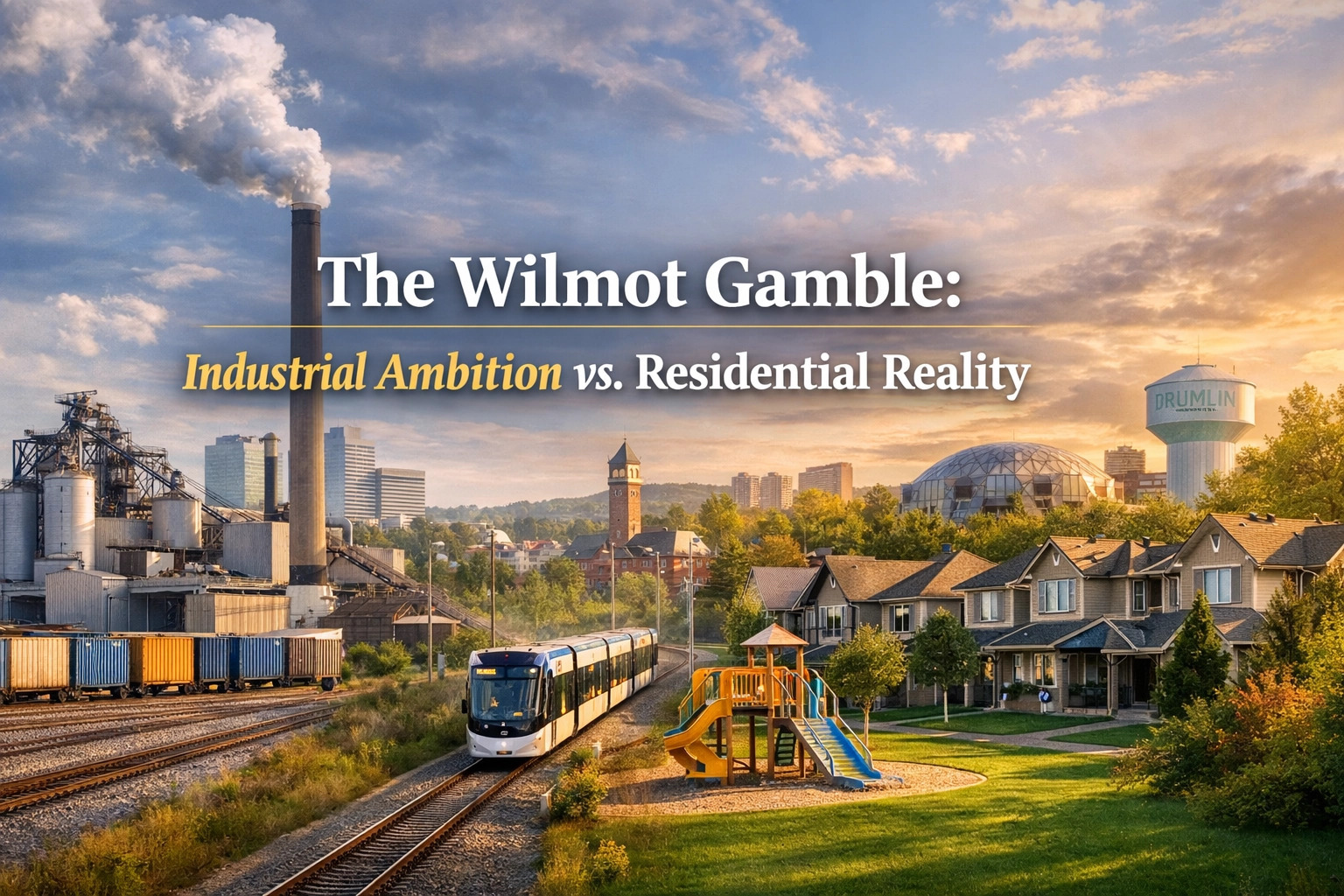
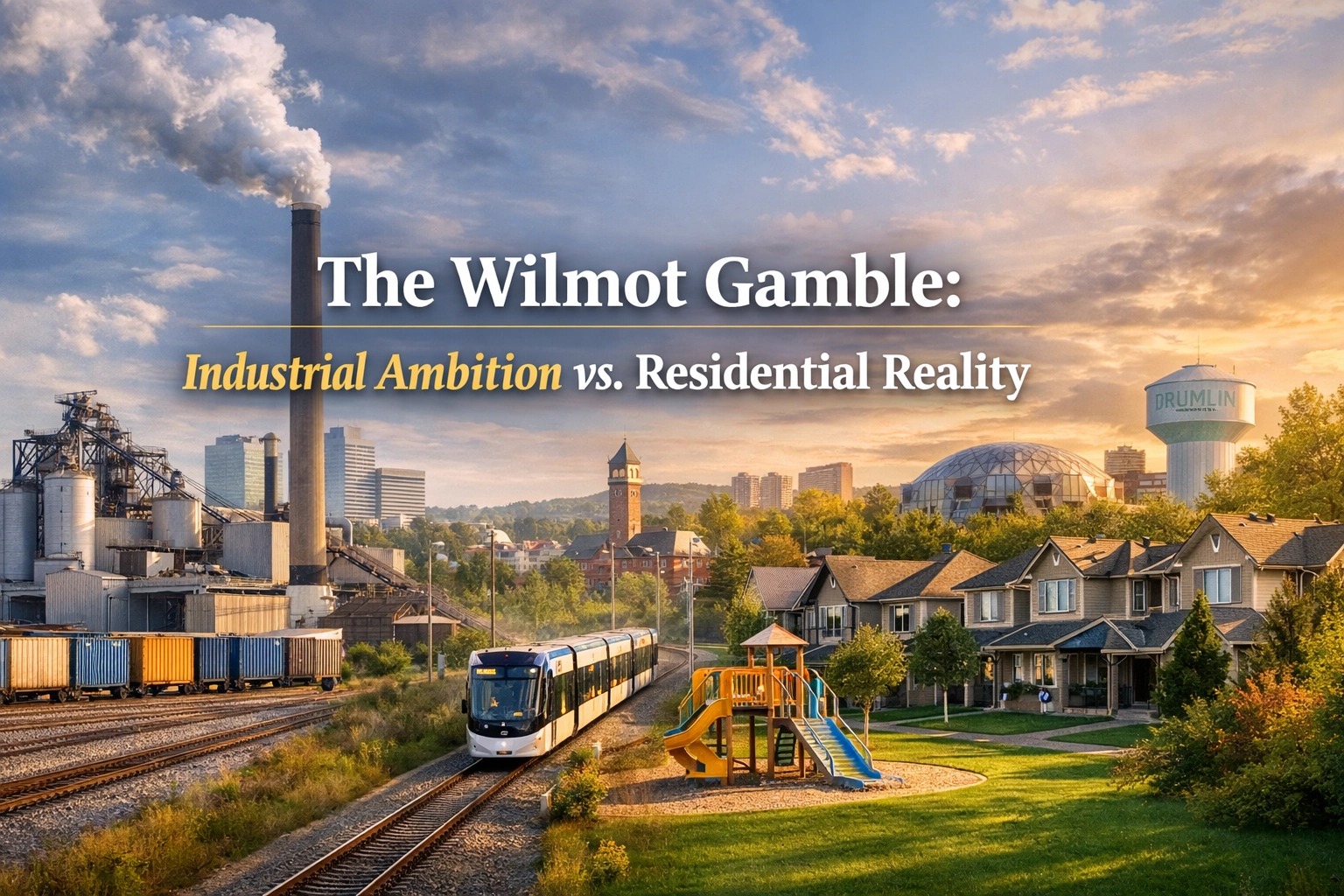
There’s a fascinating contradiction playing out right now in Waterloo Region, and if you’re a property owner, investor, or developer, you need to understand what’s happening beneath the surface. As I navigate the current market, I’m seeing a landscape where policy and infrastructure are colliding in ways that will define our local economy for the next twenty years.
While the Region has effectively frozen new residential development approvals in Kitchener, Waterloo, and parts of Cambridge due to water capacity constraints at the Mannheim Wastewater Treatment Plant, they’re simultaneously moving forward with an aggressive 770-acre industrial land assembly in Wilmot Township. This isn’t just a minor expansion; it’s a project being billed as a potential $10 billion economic catalyst.
I’m not here to tell you this is inherently good or bad. My role is to help you cut through the noise. What I am here to do is break down what this strategic choice means for property values, development opportunities, and the long-term growth trajectory of our region.
The Numbers Behind the Bet
Let’s start with what we know from the ground level. The Region of Waterloo has been actively acquiring prime agricultural land in Wilmot Township, specifically in the New Hamburg area, for future industrial and employment uses. According to Regional Council meeting minutes from late 2025, the goal is to create a large-scale employment corridor that could attract advanced manufacturing, logistics, and technology companies.
The “$10 billion investment” figure has been floated by regional economic development officials as the potential private-sector capital this land assembly could attract over the next 15-20 years. To put that in perspective, that’s roughly equivalent to the entire annual GDP of Waterloo Region’s manufacturing sector. It is a massive swing for the fences.
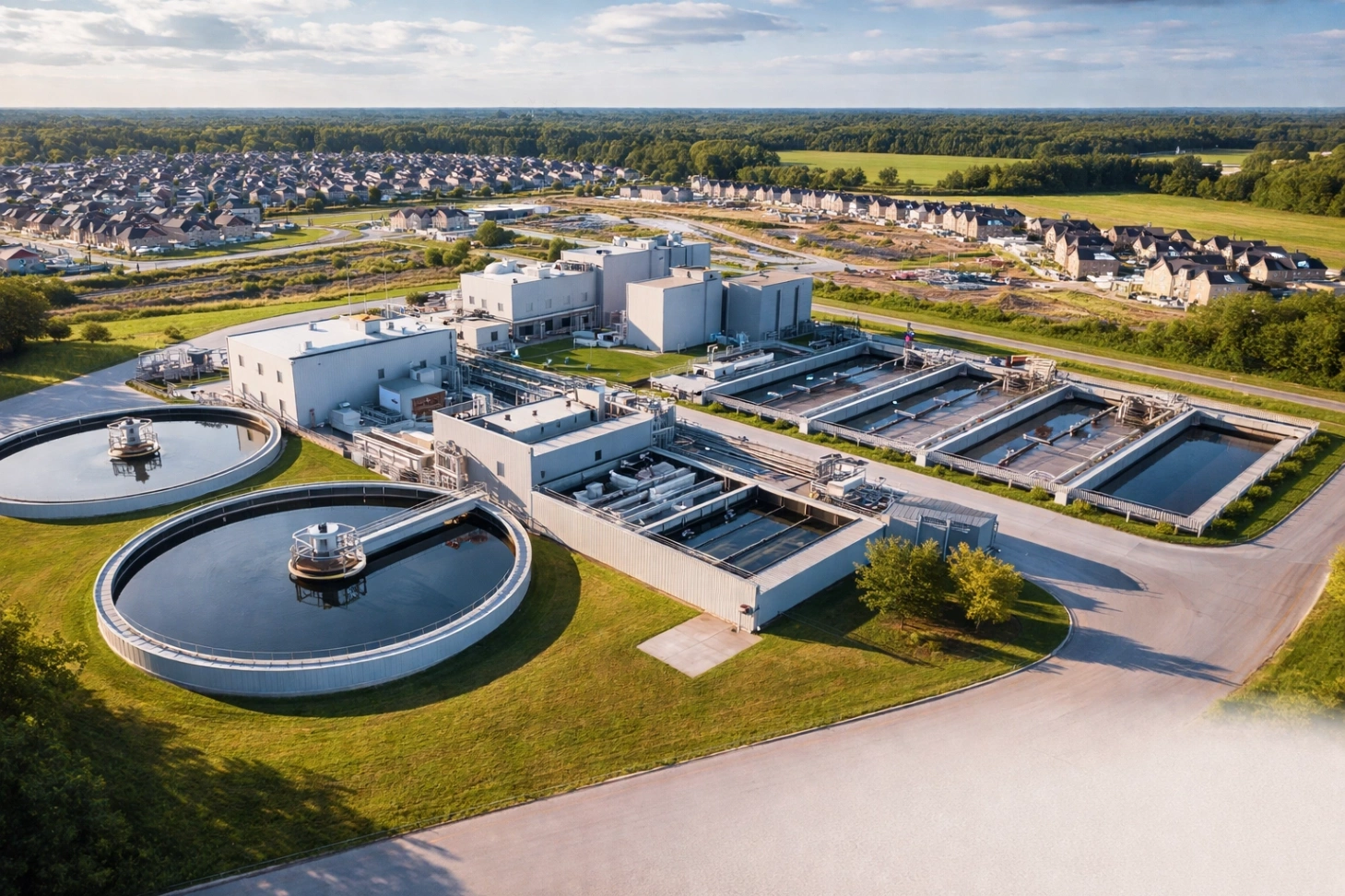
The land itself represents some of the most fertile agricultural soil in Ontario: Class 1 and 2 farmland that’s been in agricultural production for generations. The Region’s strategy is to transition this land to serviced industrial lots, complete with water, wastewater, roads, and utilities infrastructure.
Here’s where it gets interesting: while residential developers are being told “we don’t have the water capacity,” industrial development is being prioritized because commercial and industrial users generally consume significantly less water per acre than high-density residential developments. It is a matter of resource allocation, and right now, the Region is choosing pipes for factories over pipes for family homes.
The Resource Priority Conflict
This is the core tension I want you to understand, because it’s going to shape property investment decisions for the next decade. If you are looking to search for properties, you need to know why certain areas are moving faster than others.
Waterloo Region is making a calculated bet that jobs growth will drive regional prosperity more effectively than housing growth in the short term. The thinking goes like this: attract major employers, create high-paying jobs, generate commercial tax revenue, and then use that revenue to fund the infrastructure upgrades (including expanded water treatment capacity) needed to unlock residential growth later.
It’s a “jobs first, housing second” strategy.
The problem? We’re already dealing with a housing affordability crisis. According to the Canadian Real Estate Association (CREA), the benchmark home price in Kitchener-Waterloo reached $697,400 in January 2026. Meanwhile, the Region’s own housing needs assessment projects we’ll need approximately 70,000 new housing units by 2031 to keep pace with population growth and household formation.
If you freeze residential development while the population continues to grow: both through natural increase and employment-driven migration: you’re creating massive upward pressure on housing prices and rents.
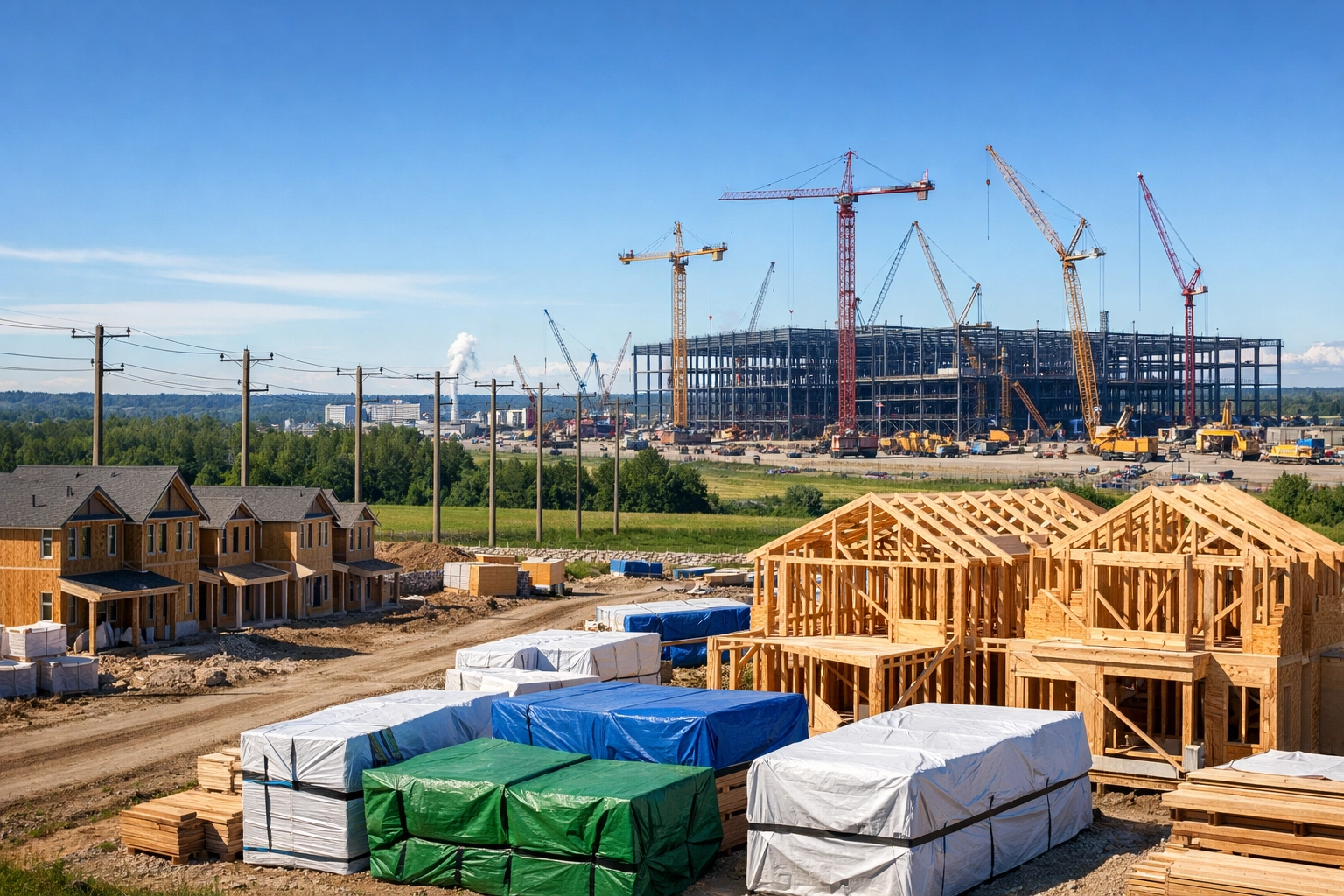
From a pure real estate investment perspective, this creates what I call “manufactured scarcity.” Properties with existing development approvals, servicing agreements, or grandfathered zoning in Kitchener, Waterloo, and Cambridge just became significantly more valuable. If you own a residential development site with water allocation already secured, you’re holding an increasingly rare asset.
What This Means for Rural Property Values
Here’s where most people aren’t paying attention, but should be: the Wilmot land assembly is fundamentally changing the calculus for rural property owners throughout the township. Traditionally, farmland in Wilmot has been valued based on agricultural productivity: essentially, what can you grow on it and what’s the per-acre rental rate for cash crop farmers?
That valuation model is being disrupted. Once the Region begins servicing this 770-acre employment corridor with municipal water, wastewater, and roads, every adjacent property owner is going to start asking: “When does my land get redesignated? When do I get access to services?”
We’re already seeing speculative purchasing activity. According to land registry data I’ve reviewed, there have been at least a dozen farmland transactions in Wilmot Township in the past 18 months where the purchase price significantly exceeded agricultural value. This is a clear indication that buyers are betting on future employment land conversion.
But here’s the risk: not every adjacent parcel will be redesignated. The Region has been explicit that this is a contained employment area, not a blanket rezoning of rural Wilmot. Property owners who purchase at “development speculation” prices but never receive employment land designation could be holding overpriced farmland for decades.
The Infrastructure Funding Gap
Let’s talk about the elephant in the room: how is the Region paying for this? The servicing costs for a 770-acre employment corridor are substantial: we’re talking $150-200 million minimum for roads, water, wastewater, stormwater management, and utilities. Traditionally, these costs would be recovered through development charges paid by the companies building facilities on the land.
However, under Bill 23 (the More Homes Built Faster Act) and subsequent provincial legislation, Ontario has significantly reduced the development charges municipalities can collect. While the focus of Bill 23 was often on residential, it impacts the broader municipal ability to fund growth-related infrastructure.
According to the Region’s 2025 budget documents, they’re projecting a $47 million shortfall in development charge revenue over the next five years directly attributable to provincial legislative changes. That means servicing costs for major projects like the Wilmot employment lands will need to come from property tax increases, reserves, or debt financing.
If you’re a residential property owner in Kitchener, Waterloo, or Cambridge, you need to understand that your property taxes are likely subsidising infrastructure that primarily benefits industrial development in Wilmot. That’s not a value judgment; it’s an accounting reality. It makes calculating your mortgage and understanding your carrying costs even more important as taxes shift.
The Long Game: What Happens in Five Years?
Here’s my professional assessment of where this is heading:
Short term (2026-2028): Expect continued upward pressure on residential property values in Kitchener, Waterloo, and Cambridge as development constraints remain in place. Purpose-built rental and intensification projects with existing approvals will command premium pricing. Rural residential properties in Wilmot (estate homes on agricultural land) will see increased interest from buyers priced out of urban markets.
Medium term (2028-2031): If the Wilmot employment lands successfully attract one or two anchor tenants: think large-scale advanced manufacturing or logistics operations: you’ll see rapid land value appreciation throughout the corridor. Adjacent commercial and mixed-use development will follow. However, if the employment lands fail to attract tenants, a real possibility given global economic uncertainty, the Region will be sitting on expensive serviced land generating minimal tax revenue.
Long term (2031+): Assuming the employment strategy succeeds and generates the projected tax revenue, the Region will finally have the fiscal capacity to fund expanded water treatment infrastructure. At that point, you’ll see residential development constraints gradually lifted, releasing pent-up housing supply. Property owners who purchased during the constrained period will likely see significant value realization.

What Should You Do With This Information?
If you’re an investor or property owner in Waterloo Region, here’s my practical advice:
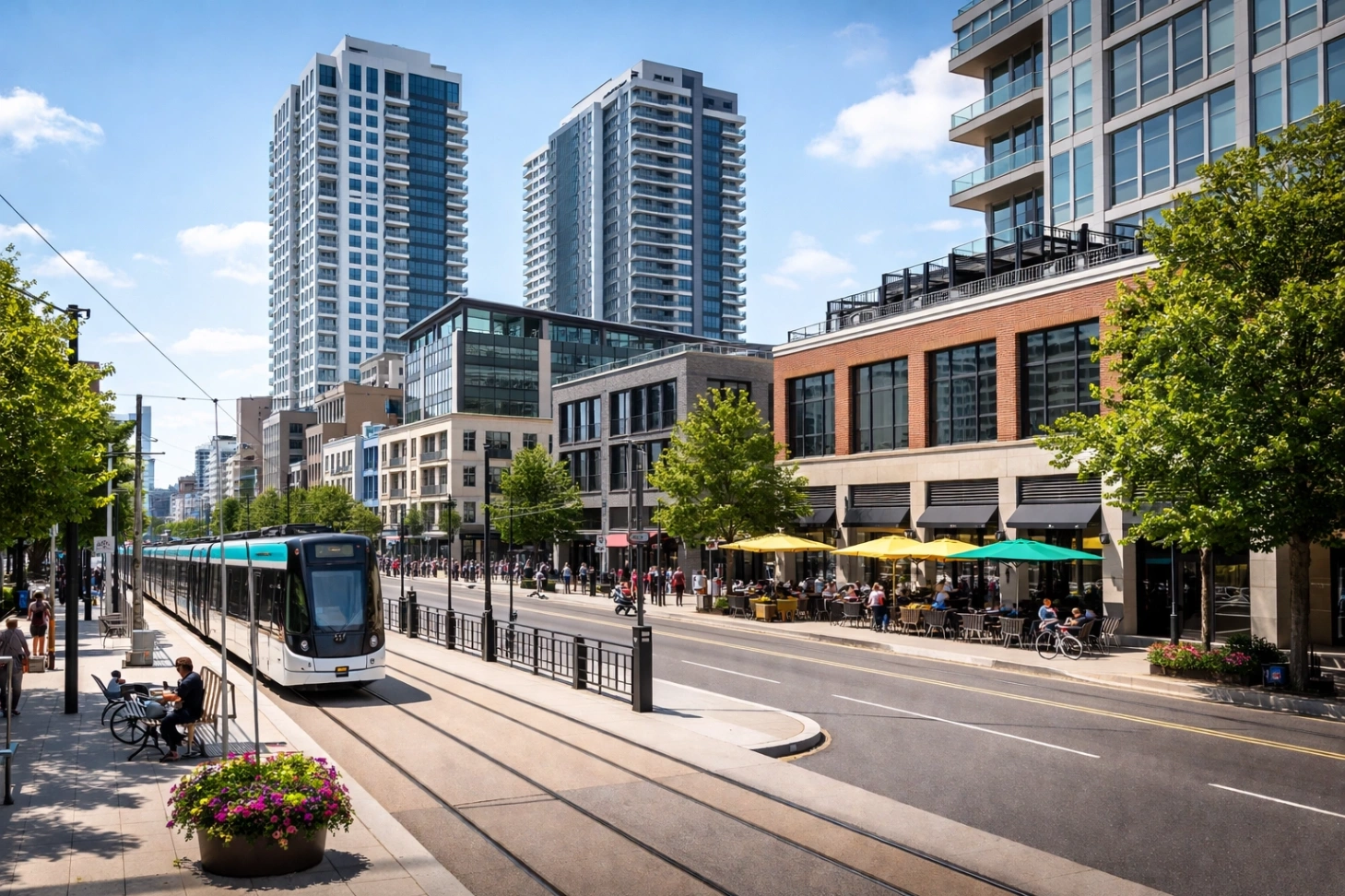
- For residential property owners: Understand that your property’s scarcity value is temporarily elevated. If you’re considering selling in the next 2-3 years, market conditions favour sellers. If you’re buying, focus on properties with existing development potential or locations near planned rapid transit like the ION.
- For rural landowners in Wilmot: Don’t assume your farmland will automatically be redesignated for employment use. Have a clear conversation with a land use planning consultant before making purchasing decisions based on speculation. If your land isn’t immediately adjacent to the designated employment corridor, agricultural valuation is probably still the appropriate baseline.
- For developers: Properties with secured water allocation and development approvals in Kitchener, Waterloo, and Cambridge are premium assets right now. Check active listings to see what is currently on the move. If you’re looking to acquire, understand that you may be buying into a 5-7 year hold before servicing constraints are resolved.
The Wilmot land assembly represents a significant strategic gamble by Waterloo Region, one that prioritizes jobs and the commercial tax base over immediate housing needs. Whether it pays off will depend on global economic conditions and the political will to fund infrastructure expansion when residential development pressure becomes unsustainable.
What’s certain is this: the next five years will create winners and losers in Waterloo Region’s property market. The winners will be those who understood the infrastructure constraints and positioned themselves accordingly.
If you’re trying to navigate these market dynamics, whether you’re buying, selling, or holding, let’s have a conversation. You can reach out to me through my contact page to discuss your specific situation and how these regional trends impact your property decisions.
Kim Louie, Real Estate Broker partnered with Coldwell Banker Peter Benninger Realty | Your Waterloo Region Real Estate Resource
📲 519.573.0837
📧 realtorkimlouie@kimlouie.net
💻 www.kimlouie.net
*** Not intended to solicit clients under contract. Content is for informational purposes and not guaranteed nor warrantied ***
