

 Facebook
 X
X
 Pinterest
 Copy Link
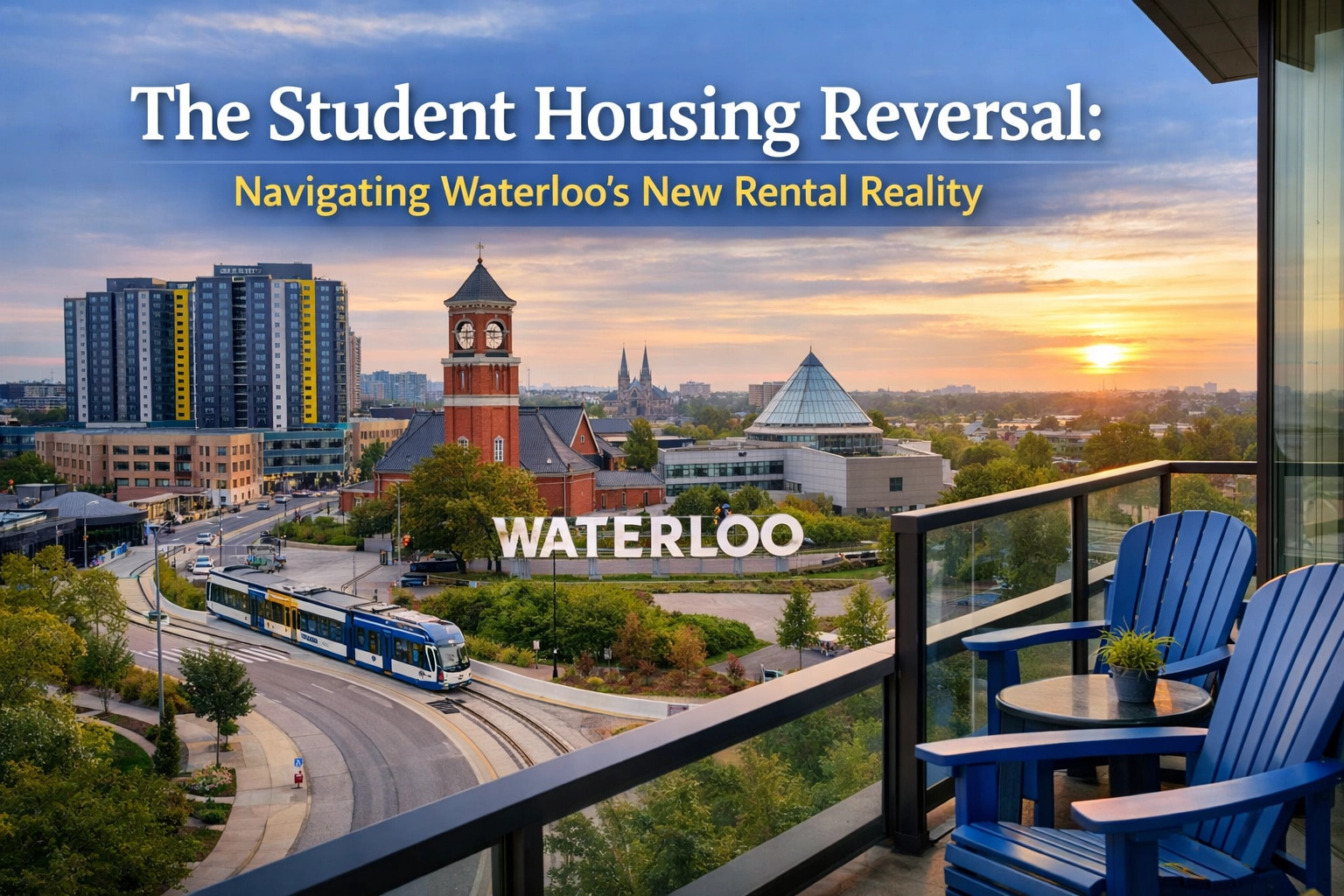
If you’ve been investing in Waterloo Region’s rental market over the past five years, particularly around the university corridor, you’ve likely noticed something unsettling: the rules of the game have fundamentally changed. The student housing gold rush that defined our market from 2018 through 2023 has hit a wall, and many landlords are now facing a reality they didn’t see coming.
I’m going to walk you through what’s actually happening beneath the surface of Waterloo’s rental market, why this shift matters more than most people realize, and what it means for your investment strategy moving forward.
The Federal Policy Earthquake
In January 2024, the federal government imposed a two-year cap on international student permits, reducing approvals by 35% nationally. For Waterloo Region: home to the University of Waterloo and Wilfrid Laurier University: this wasn’t just another policy adjustment. It was a market reset.
The University of Waterloo alone hosts over 6,500 international students, representing approximately 15% of its total enrolment. When you factor in Laurier and Conestoga College, international students have been the demographic backbone of our purpose-built student housing boom. Developers built thousands of units anticipating continued growth in this segment.
That growth has stopped.
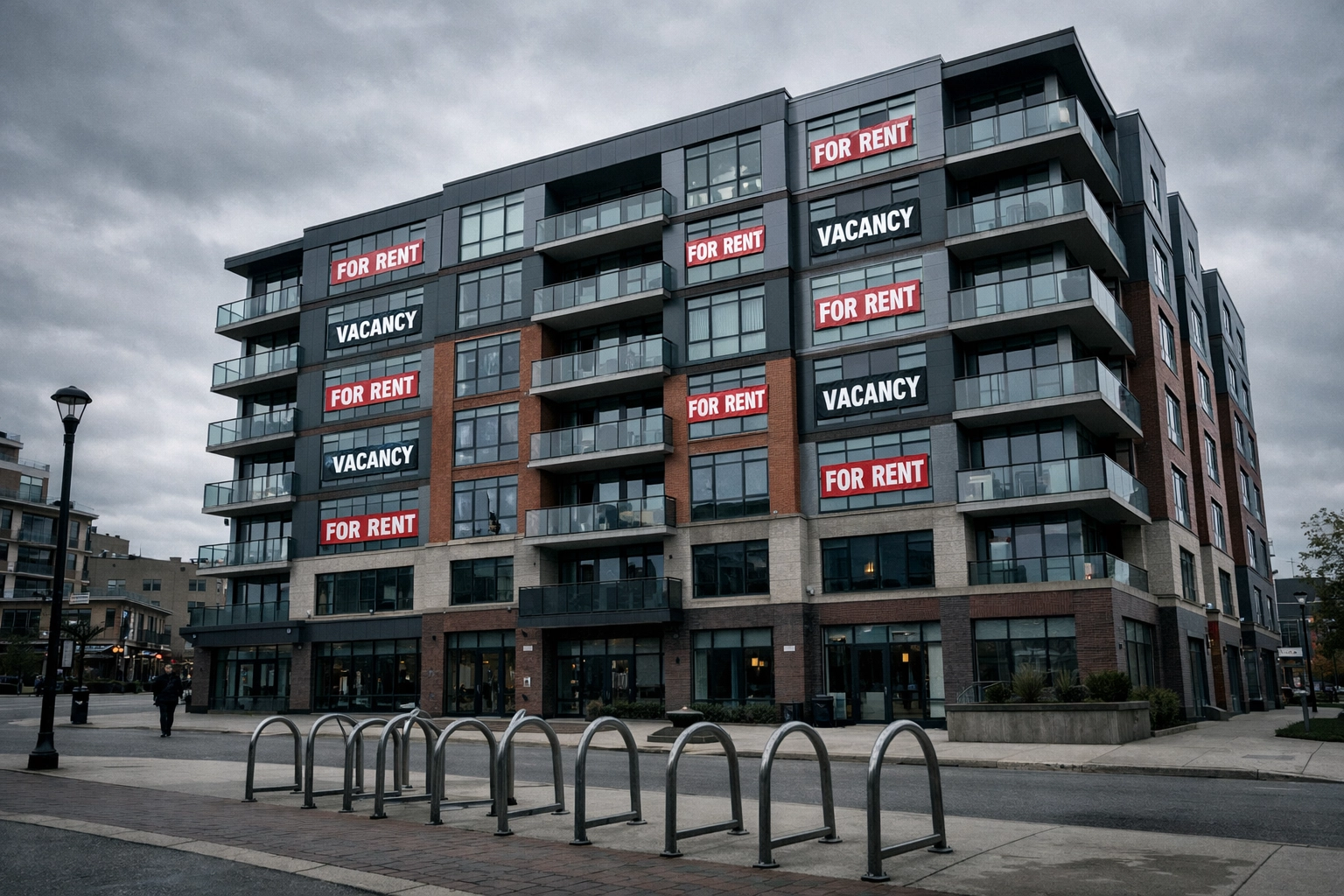
According to Statistics Canada, rental vacancy rates in Kitchener-Cambridge-Waterloo hit their highest levels since 1993 in fall 2024, climbing to 3.8% from 1.9% the previous year. That’s not a marginal shift: it’s a doubling of available units in a market that was chronically undersupplied just 18 months ago.
The Condo Investor Squeeze
Here’s where it gets uncomfortable for a lot of investors. Between 2019 and 2023, hundreds of investors purchased pre-construction condos in Uptown Waterloo, around the universities, and along the ION corridor specifically to capture student rental demand. The math made sense at the time: international students paid premium rents, were reliable tenants, and the vacancy risk was minimal.
Today, those same investors are dealing with three simultaneous pressures:
First, competition has intensified. Purpose-built student housing developments like ICON and Sage have added over 2,000 beds to the market since 2022. These buildings offer amenities, furnished units, and all-inclusive pricing that individual condo landlords can’t match without significant capital investment.
Second, rental rates have softened. Where a one-bedroom near the universities commanded $1,800-$2,000 per month in 2023, those same units are now listing at $1,600-$1,750. That’s a 10-15% compression in gross rental income.
Third, carrying costs haven’t decreased. Mortgage rates remain elevated compared to the 2020-2021 period when many of these purchases were made. Property taxes in Waterloo increased by 5.9% in 2024 and are projected to rise another 6-8% in 2026 due to the Region’s infrastructure funding shortfalls under Bill 23. Condo fees continue their annual escalation.
The result? Negative cash flow for many investors who were counting on appreciation to offset operating losses.
The Short-Term Rental Trap Door
Some landlords looked at short-term rentals as an escape hatch. If long-term student demand was softening, why not pivot to Airbnb and capture business travellers or parent weekend demand?
That door is closing.
As of July 2026, Waterloo’s short-term rental regulations will eliminate the current exemption for apartment units. Under the new framework, short-term rentals must be operated in your principal residence: meaning investment condos will no longer qualify for STR licensing.
The City estimates approximately 100 of the 500 active short-term rentals in Waterloo will be forced back into the long-term rental market. That’s additional supply hitting an already oversupplied segment.
The only regulatory grey area remaining is mid-term rentals of 30+ days, which may fall outside the new licensing requirements. But that’s a niche market, not a scalable solution.
What The Data Actually Shows
Let me be clear about what the statistics are telling us, because there’s a lot of noise out there.
The Canadian Mortgage and Housing Corporation (CMHC) reported that purpose-built rental apartment vacancy rates in Kitchener-Cambridge-Waterloo climbed from 1.9% in October 2023 to 3.8% in October 2024. That’s the highest rate since their 1993 survey data.
For context, a “balanced” rental market typically sits around 3%. Above 3%, landlords start competing for tenants rather than tenants competing for units. We’ve crossed that threshold decisively.
The University of Waterloo’s fall 2025 enrolment data (released in November 2025) showed international undergraduate enrolment declined by 12% year-over-year, with further declines projected for fall 2026 due to the ongoing federal caps.
Meanwhile, condo completions in Waterloo Region are projected to add another 1,400 units to the rental supply in 2026, according to regional development tracking data. Many of those units were pre-sold to investors during the 2021-2022 buying frenzy.

The Strategic Pivot
So what do you do if you’re holding a condo that’s no longer penciling out as a student rental?
Option One: Reposition for Young Professionals
Waterloo’s tech sector employment remains robust despite broader economic headwinds. Google, Shopify, and OpenText continue to employ thousands of workers in the 25-35 age bracket: precisely the demographic that rents condos long-term.
The challenge? These tenants expect different unit conditions than students. You’ll need to upgrade finishes, ensure in-suite laundry, and provide parking. That requires capital investment.
Option Two: Consider Owner-Occupancy
If you’re within 3-5 years of retirement or lifestyle downsizing, moving into your investment condo and converting your primary residence to a rental (or selling it) might make more financial sense than continuing to subsidize a negative cash flow property.
This also positions you to eventually use the principal residence exemption on capital gains when you sell.
Option Three: Strategic Divestment
This is the option no one wants to discuss, but it’s sometimes the correct financial decision. If your condo is in a building with rising maintenance issues, special assessments on the horizon, or structural vacancy problems, holding onto it hoping for a market recovery could cost you more than selling now and redeploying capital elsewhere.
I’ve had three investor clients in the past four months make this exact decision, selling condos near the universities at modest losses but avoiding 2-3 years of negative cash flow that would have eroded their equity position further.
What I’m Watching in 2026
The rental market dynamics I’m monitoring most closely are:
1. Spring 2026 Lease-Up Rates: May-August is when student housing traditionally signs leases for the September term. If vacancy rates remain elevated through this period, we’ll know the oversupply isn’t transitory.
2. Purpose-Built Student Housing Absorption: Several major PBSH projects deliver in summer 2026. How quickly they fill (and at what rental rates) will signal whether developers overbuilt this segment.
3. Regional Transit Expansion: If the ION LRT extension to Cambridge proceeds on schedule, rental demand dynamics along the corridor could shift significantly, creating pockets of opportunity in currently underserved areas.
4. Federal Policy Adjustments: The international student cap is currently set to expire in 2026. Whether it’s extended, modified, or eliminated will be the single biggest factor affecting Waterloo’s rental market for the next 3-5 years.
The Bottom Line
Waterloo’s student housing market has shifted from scarcity to surplus faster than most investors anticipated. The confluence of federal immigration policy, purpose-built student housing oversupply, and tightening short-term rental regulations has created a perfect storm for condo investors who were banking on continued demand growth.
This isn’t a temporary blip. The structural factors driving this shift: government policy, demographic trends, and supply pipeline momentum: have multi-year timelines.
If you’re holding rental properties in this segment, now is the time for an honest financial assessment. Calculate your true carrying costs including opportunity cost of capital. Project realistic rental income based on current market conditions, not 2023 rates. Factor in upcoming regulatory changes.
Then make a decision based on data, not hope.
I’m working with several investors right now to evaluate exactly these scenarios. If you want a confidential analysis of your specific situation and what your realistic options look like in today’s market, let’s talk.
Kim Louie, Real Estate Broker partnered with Coldwell Banker Peter Benninger Realty | Your Waterloo Region Real Estate Resource
📲 519.573.0837
📧 realtorkimlouie@kimlouie.net
💻 www.kimlouie.net
*** Not intended to solicit clients under contract. Content is for informational purposes and not guaranteed nor warrantied ***
