

 Facebook
 X
X
 Pinterest
 Copy Link

It is Friday, May 1st, 2026, and Waterloo’s market is no longer rewarding broad optimism. It is rewarding selectivity. What some people are calling a gentle market “easing” is, in practice, a stress test. When markets stop rising in unison, weak neighbourhoods get exposed, overbuilt product gets repriced, and buyers finally see which pockets were supported by fundamentals and which were supported by momentum.
According to the latest data from the Cornerstone Association of Realtors, the Waterloo Region has been moving toward more balanced conditions. That does not mean every neighbourhood is now a bargain. It means the market is separating into winners and losers more clearly. In this phase, buyers need to think less like shoppers and more like capital allocators. 🤝
My view is straightforward: 2026 is not the year to buy “whatever fits.” It is the year to understand Risk Inversion. In plain terms, the properties that looked safest during the boom because they were cheaper, faster-moving, or more speculative are now carrying more downside risk. Meanwhile, stable, family-oriented neighbourhoods with school-driven demand, limited turnover, and proven owner-occupier depth are acting more like defensive assets.
So if you are asking where to put your money and where to stay away, here is the consultant-level answer. 🚀
1. Laurelwood: The Blue Chip Fortress 🎓
Laurelwood is the strongest defensive neighbourhood in Waterloo. Full stop. If you want the part of the city that behaves most like a blue chip asset in a softer market, this is it.
Why I would put money here:
Laurelwood’s resilience is not accidental. It is supported by school-driven demand, a deeply established family buyer pool, proximity to Laurel Creek Conservation Area, and a neighbourhood identity that has held up through multiple market cycles. In a period of Risk Inversion, that matters. The premium here is not just for the house itself. It is for the stability of the resale audience when market conditions get tougher. 🏫
This is the kind of pocket where buyers still stretch because they believe in the long-term utility of the location. That gives Laurelwood pricing durability that weaker, more speculative pockets simply do not have. If you are buying detached in Waterloo in 2026 and your priority is capital preservation first, this is where I would start.
My take: pay up for quality here. Laurelwood is not the place to hunt for a dramatic discount. It is the place to buy a fortress and accept that the best assets rarely go on sale in a meaningful way.
Local Perk: You are right next to the Laurel Creek Conservation Area. It’s perfect for a weekend hike or a quiet afternoon by the water without leaving the city limits. 🌲

2. Beechwood: Stable, but Selective 🎾
Beechwood still deserves respect, but I would not treat every Beechwood listing as automatically elite. This is a strong neighbourhood class overall, yet buyers need to separate renovated, well-located homes from dated inventory being priced as if it were 2021.
Where the value actually is:
Beechwood benefits from large lots, mature trees, established community associations, and a buyer base that consistently values character over pure square footage. That gives it better downside protection than many newer subdivisions. 🌳
That said, this is now a selective market. The right play in Beechwood is the disciplined renovation play, not blind premium buying. If a property has layout issues, deferred maintenance, or an overambitious seller, walk away. If the bones are strong and the pricing reflects the work required, the neighbourhood still offers one of the better risk-adjusted opportunities in Waterloo.
My take: Beechwood is not a trap, but it is no longer a market where every house gets a pass. Buy the right lot, the right layout, and the right price. Leave the nostalgia premium to someone else.
3. Eastbridge: The Speculation Hangover 🏎️
Eastbridge is where I would tell buyers to be careful. Not because it is a bad neighbourhood in absolute terms, but because it became a momentum trade during the pandemic years and pricing is still adjusting back toward reality.
Why I am cautious here in 2026:
Eastbridge benefited from the era when buyers chased space, highway access, and newer housing stock with very little resistance. That pushed values harder and faster than fundamentals could comfortably justify. In today’s market, that leaves the area more exposed to Risk Inversion. The same homes that felt like easy, safe buys when credit was cheap now carry more repricing risk because the buyer pool is more payment-sensitive and less speculative.
Yes, there is still functional value here. You get access to Highway 85, RIM Park, Grey Silo Golf Course, and generally practical family layouts. But I would not call this a simple value play. I would call it a market still working through a speculation hangover. Pricing may look better than it did, but better does not automatically mean cheap enough.
My take: negotiate hard in Eastbridge or stay patient. If a seller is anchored to peak-cycle expectations, let the listing sit. This is one of the pockets where I think buyers still have room to wait for the market to do more of the work.
Local Perk: You have RIM Park and the Grey Silo Golf Course right in your backyard. If you are an active family into sports or golf, the lifestyle value here is unbeatable. ⛳️

4. Uptown Waterloo: The High-Density Gamble ☕️
Uptown is the neighbourhood most people want me to be diplomatic about. I am not. If you are looking at condos in Uptown Waterloo in 2026, you need to treat that decision as a high-density gamble, not a default “smart urban buy.”
The issue is the condo glut:
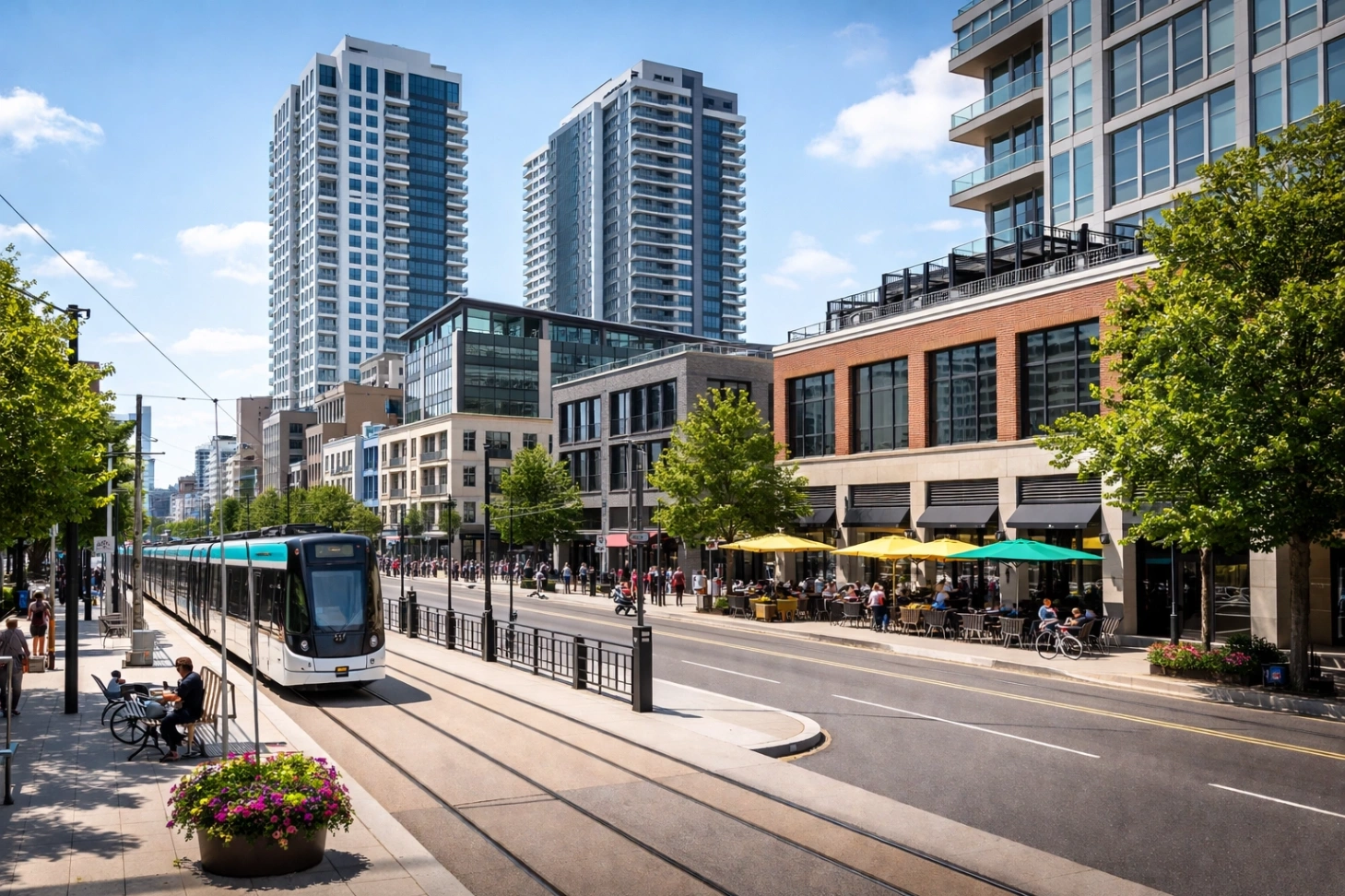
The local condo segment is dealing with the most obvious imbalance between product availability and buyer depth. When inventory builds and absorption slows, pricing pressure does not disappear just because the neighbourhood is walkable and close to the ION’s white-and-black trains. It intensifies. 🏙️
That is where Risk Inversion becomes critical. During the expansion phase, smaller urban units often looked like the lower-risk entry point because they were more affordable. In this market, many of those same units are now the higher-risk asset because they face more competition, weaker differentiation, higher sensitivity to financing costs, and less emotional urgency from buyers. In other words, lower price does not equal lower risk.
There are exceptions. A rare unit with exceptional layout, low carrying costs, and true end-user appeal can still make sense. But as a category, I would be far more defensive here than most agents are willing to say.
My take: if you are an investor or appreciation-focused buyer, I would stay away from average Uptown condo inventory right now. If you are an end user buying strictly for lifestyle and planning for a long hold, proceed carefully and negotiate like the market owes you a discount.
Check out my recent post on what to know when looking for a home near the new transit hub to see how the ION light rail transit is still shaping property values in 2026.
5. Colonial Acres: Quality Bias Required 💎
Colonial Acres remains attractive for buyers who want larger homes, mature lots, and a more executive feel, but this is another pocket where quality differences matter more than ever.
The 2026 Strategy:
The narrowing spread between standard detached homes and higher-end properties has created a real opportunity for buyers who were already planning to move up. That part is true. But the winning move is not simply “buy luxury for less.” It is to target properties with enduring appeal: strong lot positioning, good renovation quality, and layouts that will still compete when buyer scrutiny stays high. 🏠✨
My take: Colonial Acres can be a smart allocation for move-up buyers, but only if you are buying lasting quality. Mediocre luxury gets punished fast in a slower market. Exceptional luxury still finds its audience.

How to Navigate This “Easing” Market 🧭
Buying in 2026 requires a sharper framework than the old “buy a good home in a good area” advice. Here are three rules I would follow:
- Prioritise fortress neighbourhoods over headline discounts: A cheaper entry point in a weaker pocket can create more downside than paying a fair price in a resilient area like Laurelwood.
- Understand Risk Inversion before you buy: The most affordable segment is not automatically the safest segment. Condos, highly substitutable inventory, and neighbourhoods inflated by pandemic momentum deserve extra caution.
- Use balanced conditions aggressively: This is a market for due diligence, not speed. Protect yourself on financing, inspection, status review where applicable, and pricing discipline. You can read more about navigating your next chapter as a buyer right here.
Final Thoughts 💭
My position is simple. In Waterloo’s 2026 market, I would lean toward fortress neighbourhoods, proven end-user demand, and scarcity-driven detached housing. I would be much more sceptical of high-density inventory, pandemic-era momentum pockets, and any product category where sellers are still pretending the cycle never changed.
If you want the clearest summary, here it is:
- Laurelwood: buy with confidence if the numbers work. This is Waterloo’s Blue Chip Fortress.
- Beechwood: good area, but be selective and price-sensitive.
- Eastbridge: proceed carefully; this is the Speculation Hangover and pricing is still adjusting.
- Uptown condos: this is the High-Density Gamble; I would stay defensive because of the condo glut.
- Colonial Acres: buy quality, not just square footage.
That is what consultant-level decision-making looks like in a market like this. Not optimism. Not fear. Just discipline.
If you want a neighbourhood-by-neighbourhood breakdown tied to your budget, financing, and hold period, reach out. I can tell you where the risk is, where the resilience is, and where I would deploy capital in Waterloo right now.
Kim Louie, Real Estate Broker partnered with Coldwell Banker Peter Benninger Realty | Your Waterloo Region Real Estate Resource
📲 519.573.0837
📧 realtorkimlouie@kimlouie.net
💻 www.kimlouie.net
*** Not intended to solicit clients under contract. Content is for informational purposes and not guaranteed nor warrantied ***
#WaterlooRealEstate #WaterlooNeighbourhoods #BuyingAHome #KitchenerWaterloo #RealEstateTips #WaterlooRegion #KimLouieRealEstate #MarketTrends2026 #ExploreWaterloo
